
Mazu
妈祖Māzǔ960–987 (traditional dates)
The goddess of the sea, said to have been a 10th-century Fujian fisherman’s daughter; her temples, often called Tianhou, line China’s coast.
Mazu is revered as the protector of sailors and fishermen and is the most widely worshipped sea goddess in China. Tradition says she was born Lin Moniang on Meizhou Island off the coast of Fujian in the 10th century, a girl who could foresee storms and who died young trying to save people from a shipwreck. Seafarers began praying to her, and emperors granted her ever higher titles, among them Tianhou, “Empress of Heaven”, which is why many of her temples are called Tianhou Temples. As Chinese merchants and migrants sailed along the coast and overseas, they took her with them; there are said to be about 5,000 Mazu temples worldwide, and UNESCO inscribed her belief and customs as intangible heritage in 2009. Her birthday, on the 23rd day of the third lunar month, brings processions and crowds; at any time, walk around the altars rather than in front of people who are praying.
Also known as: Tianhou · Tin Hau · Lin Moniang
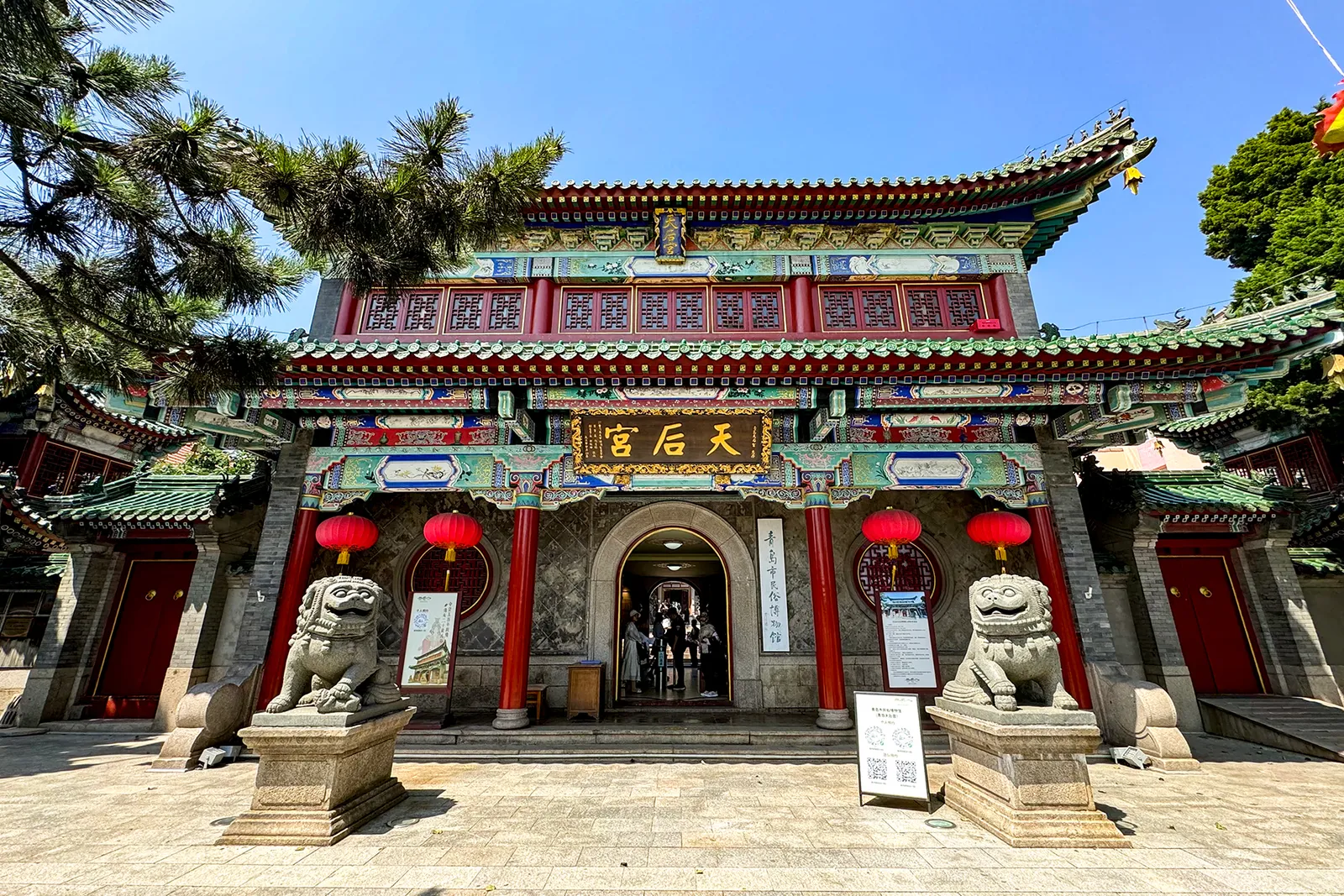
Where to see it in China

Where we mention it
- Tianjin day trip from Beijing: trains, a route, what to book Travel guides
- Quanzhou in 2 days: old town temples, stone bridges, oyster villages Travel guides
- Quanzhou Tianhou Temple (Mazu Temple) Quanzhou
- Mayu Island Shantou
- Meizhou Island Putian
- Meizhou Mazu Ancestral Temple Putian
- Fuyan Temple Mount Heng (Nanyue)
Related entries
Sources
- Mazu belief and customs — UNESCO Intangible Cultural Heritage (ich.unesco.org)
- Mazu — Wikipedia (en.wikipedia.org)
- Meizhou Island — Wikipedia (en.wikipedia.org)