
Hakka
客家Kèjiā
A Han Chinese group with its own language whose ancestors moved south in waves; famous for fortified communal houses like Fujian’s tulou.
The Hakka are a group of Han Chinese with their own language, Hakka, and a strong sense of shared origin. Their name is usually explained as “guest families”: according to their own genealogies, their ancestors left the north in several waves over many centuries and settled in the hills where Guangdong, Fujian and Jiangxi meet, arriving after other groups had taken the lowlands. To protect large clans in remote country, they built fortified communal houses: many of the round and square tulou of Fujian (their Minnan-speaking neighbours built them too) and the walled compounds, or weiwu, of Guangdong, some with hundreds of rooms around an ancestral hall. Later migrations carried Hakka families to Sichuan, Taiwan, South-East Asia and far beyond. Look for Hakka dishes such as stuffed tofu on menus in Shenzhen and Guangdong.
Where to see it in China
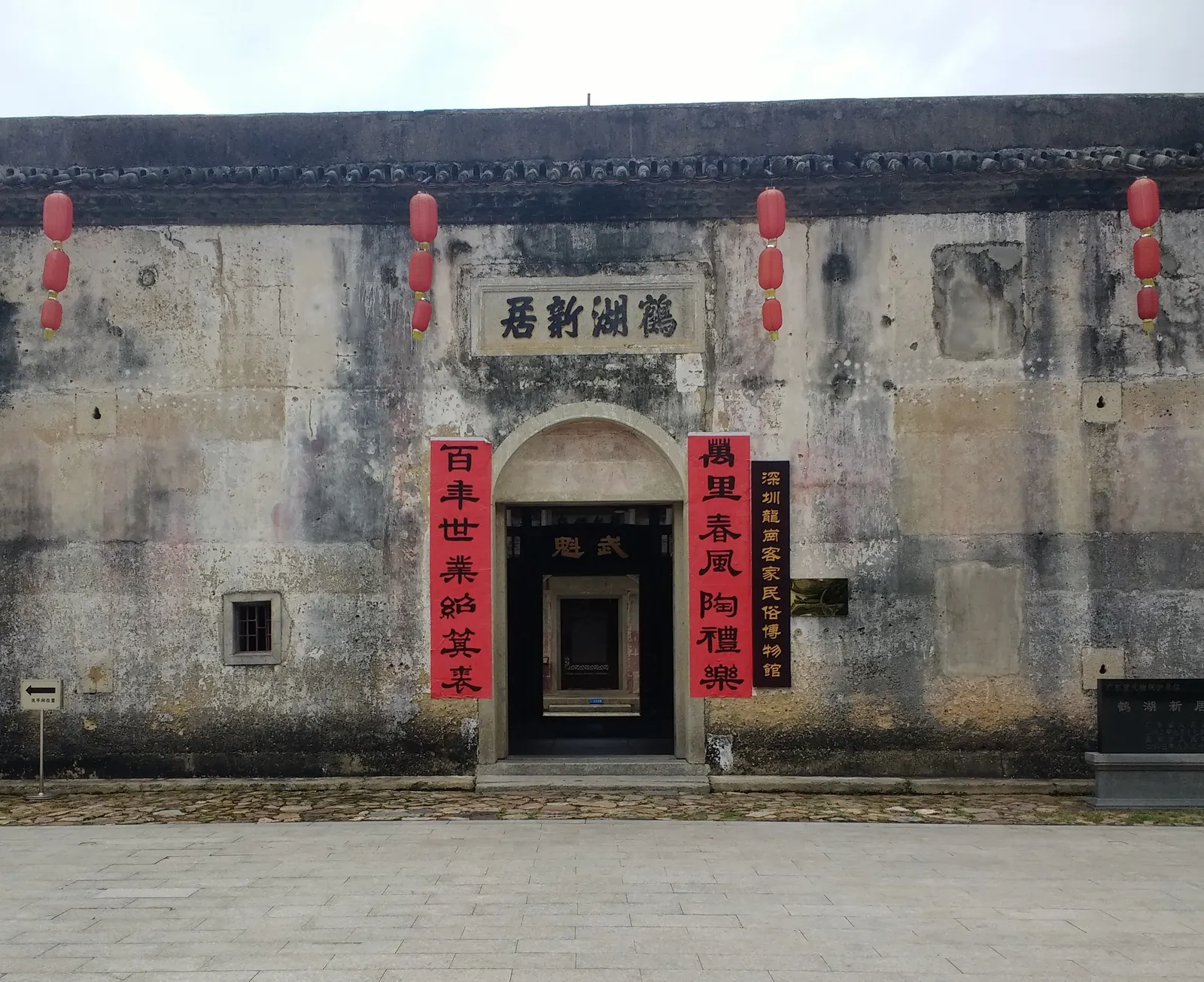
 ShenzhenCrane Lake Hakka walled house (Longgang Hakka Museum) 鹤湖新居(龙岗客家民俗博物馆)A huge Qing-dynasty Hakka walled family compound with about 300 rooms, now a free museum of Hakka life.
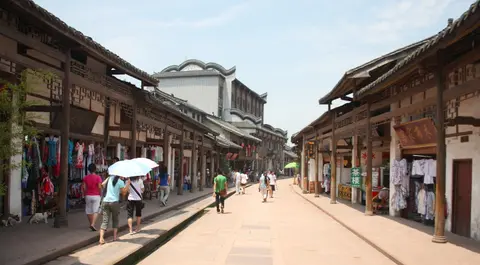 ChengduLuodai Hakka Town 洛带古镇An old town of Hakka migrants east of Chengdu, with grand guild halls and a round earth building.
Where we mention it
- Shenzhen day trip from Hong Kong: border, visa and route Travel guides
- Rice terraces in China: which to visit and in which month Travel guides
- Shenzhen Museum (History and Folk Culture, Civic Centre) Shenzhen
- Gankeng Hakka Town Shenzhen
- Ganzhou Museum Ganzhou
- Guanxi Xinwei Hakka Walled House Ganzhou
- Yanyi Wei Hakka Walled House Ganzhou
- Hakka Museum of China Meizhou
- Yannanfei Tea Plantation Meizhou
- Ye Jianying Memorial Park Meizhou
Related entries
Sources
- Fujian: People — Encyclopaedia Britannica (britannica.com)
- Fujian Tulou — UNESCO World Heritage Centre (whc.unesco.org)
- Hakka people — Wikipedia (en.wikipedia.org)
- Hakka walled village — Wikipedia (en.wikipedia.org)