
Chan Buddhism
禅宗Chánzōngfrom the 6th century
Chinese Buddhism’s meditation tradition, which flourished under the Tang and Song and spread abroad as Korean Seon, Japanese Zen and Vietnamese Thiền.
Chan is the Chinese Buddhist tradition that puts seated meditation and direct insight into one’s own mind at the centre; its name comes from the Sanskrit word dhyana, “meditation”, and in Japan it became famous as Zen. It grew from the 6th century, was most influential under the Tang and Song dynasties, and later travelled to Korea (Seon), Vietnam (Thiền) and Japan. Tradition names Bodhidharma as its first patriarch in China, a legendary Indian monk said to have meditated for nine years facing a cave wall near Shaolin, and the line then passes to Huineng, the Sixth Patriarch (traditionally 638–713), whose teaching of sudden awakening shaped the Southern school; historians treat much of this early story as later tradition. See it at Shaolin, the temple long linked to Bodhidharma and to Chan, and at Guangzhou’s Guangxiao Temple, associated with Huineng.
Also known as: Ch’an Buddhism · Zen Buddhism
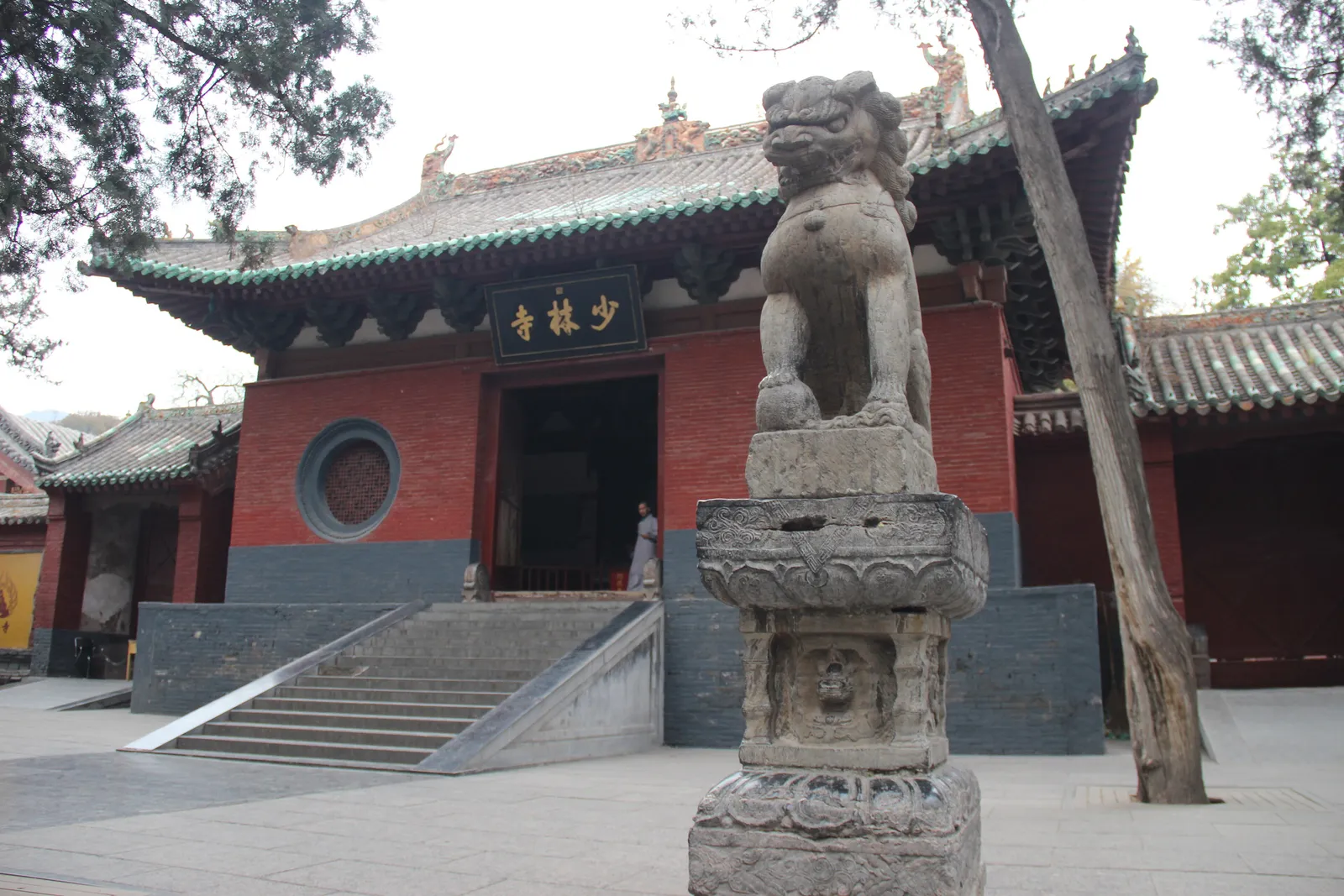
Where to see it in China
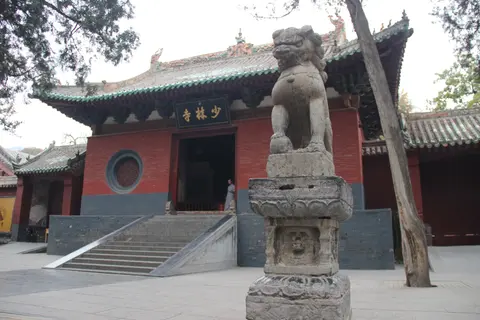 LuoyangShaolin Temple (day trip) 少林寺The temple on Mount Song linked to Bodhidharma and the Chan school, with a forest of monks’ stone pagodas and daily martial-arts shows.
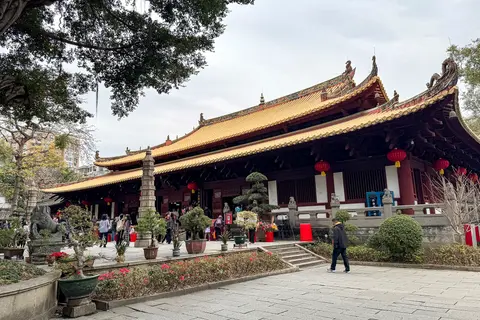 GuangzhouGuangxiao Temple 光孝寺Guangzhou’s oldest and largest Buddhist temple, where tradition says Huineng, the Sixth Patriarch of Chan, was ordained under a bodhi tree in 676.
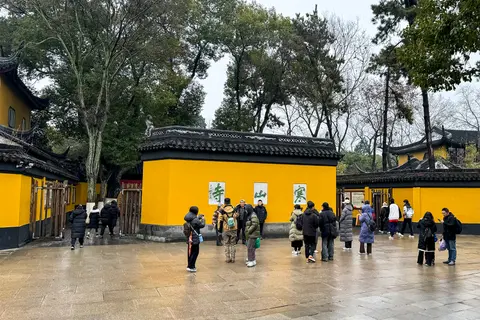 SuzhouHanshan Temple 寒山寺A Buddhist temple by Maple Bridge of the Chan Linji school, famous for a Tang poem about its midnight bell.
Where we mention it
Related entries
Sources
- Chan Buddhism — Wikipedia (en.wikipedia.org)
- Shaolin Monastery — Wikipedia (en.wikipedia.org)
- Bodhidharma Meditating Facing a Cliff — Cleveland Museum of Art (clevelandart.org)
- Hanshan Temple — Wikipedia (en.wikipedia.org)