
Arhat (luohan)
罗汉luóhàn
An enlightened disciple of the Buddha; Chinese temples show them in groups of 16, 18 or 500 lifelike statues, each with a different face.
An arhat, luohan in Chinese, is a follower of the Buddha who has reached enlightenment; in Chinese Buddhism they are revered as disciples who stay in the world to protect the teaching. Temples often line the side walls of the main hall with 16 or 18 arhats, and some build a separate hall of 500 arhats, a tradition popular in China since around the Song dynasty. Unlike calm Buddha images, arhats are shown as individuals: bald monks who laugh, scowl, scratch their ears or ride animals, sculpted in clay, wood or stone and often painted. A popular custom in such halls is to “count the arhats”: start at any statue, count your age in steps and read your fortune from the one where you stop. They are often confused with Guanyin and other bodhisattvas, but arhats are usually shown as ordinary-looking monks rather than crowned figures.
Where to see it in China
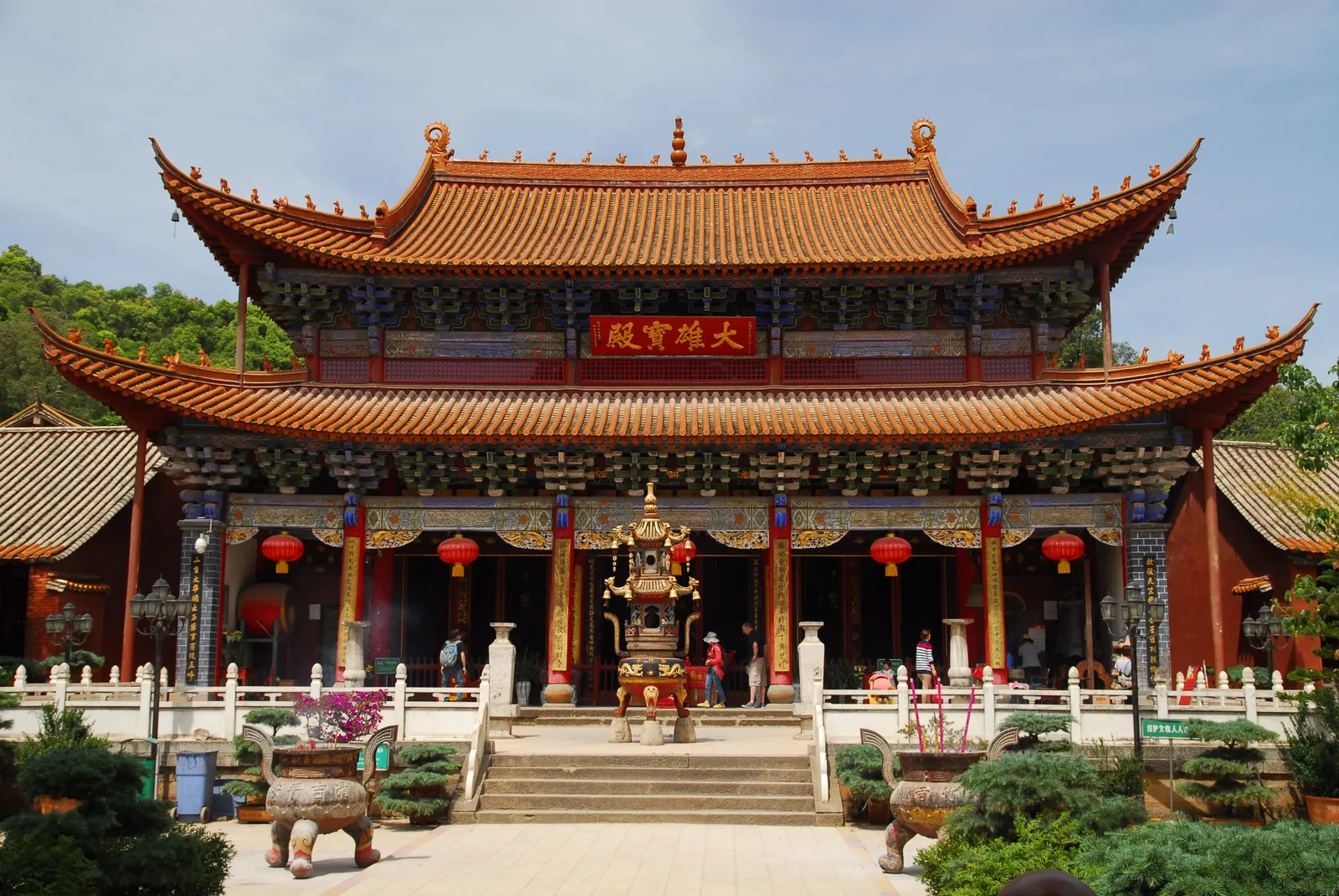
 KunmingBamboo Temple (Qiongzhu Si) 筇竹寺500 lifelike clay arhats sculpted in the 1880s, in the side halls: look for the ones riding animals, surfing waves or stretching extra-long arms.
 WuhanGuiyuan Temple 归元寺A hall of 500 life-size arhat statues where locals “count arhats” to read their fortune.
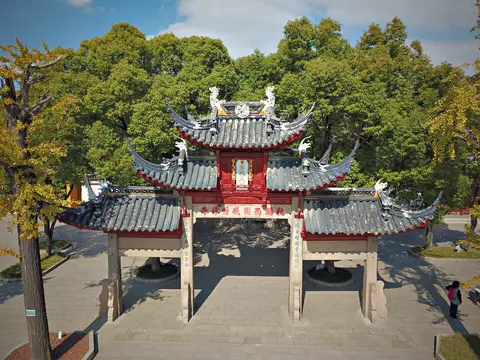 SuzhouWest Garden Temple 西园戒幢律寺A large working temple next to Lingering Garden with a hall of 500 arhat statues.
 SuzhouLuzhi Water Town 甪直古镇Baosheng Temple in this canal town keeps ancient clay arhat sculptures, the reason many Chinese visitors come.
 ChongqingLuohan Temple 罗汉寺An 11th-century temple among downtown towers whose name means Arhat Temple; known for its hall of 500 arhat statues.
Where we mention it
Related entries
Sources
- Arhat — Encyclopaedia Britannica (britannica.com)
- Figure of a luohan (arhat), Yixian, Liao dynasty — British Museum (britishmuseum.org)
- Arhat — Wikipedia (en.wikipedia.org)