
Quanzhou
泉州 · Quánzhōu
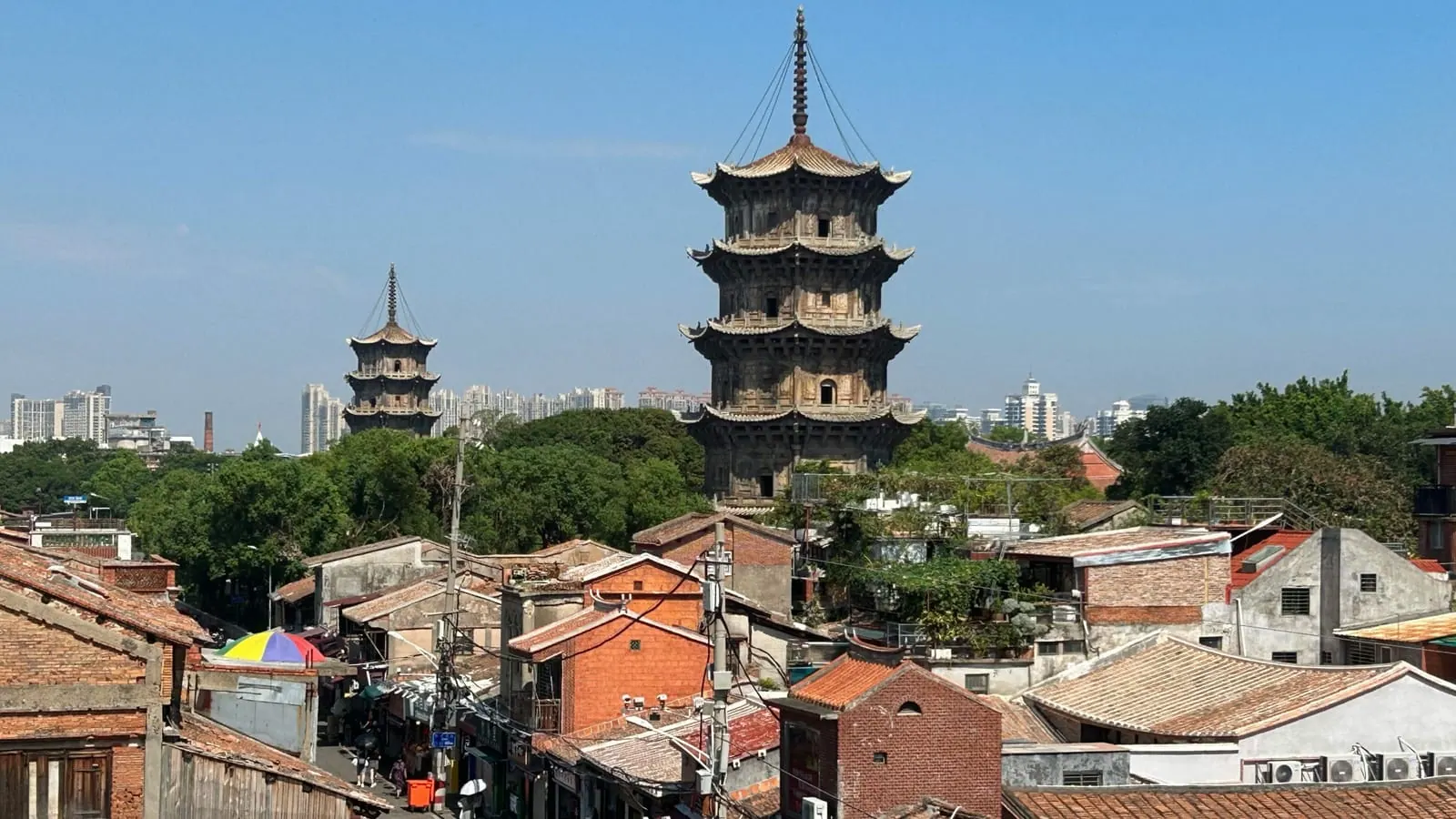
Marco Polo’s Zayton: a UNESCO-listed medieval world port of temples, a mosque and flower-crowned fishing villages.
Photo: HMGiovanniV · CC BY-SA 4.0
Best time to visit
- Jan
- Feb
- Mar
- Apr
- May
- Jun
- Jul
- Aug
- Sep
- Oct
- Nov
- Dec
From the airport or station to the city
Where you land, the ways into the city centre, how long each takes and what it costs.
From Quanzhou Station (high-speed rail)
泉州站
From Quanzhou Jinjiang International Airport
泉州晋江国际机场
From From Xiamen (Gaoqi Airport or Xiamen North Station)
厦门高崎国际机场 / 厦门北站
Getting around
Most UNESCO sites in the city — Kaiyuan Temple, West Street, the Qingjing Mosque, Guanyue Temple, the Confucius Temple and Tianhou Temple — sit inside the compact old town and are best done on foot (about 2 km end to end), with shared bikes and short DiDi rides in between. Laojun Rock is about 5 km north, Xunpu Village and the Maritime Museum lie to the east, and the bridges, Cao’an and Jiuri Mountain are 10–35 km out: use DiDi or hire a car for a day to string several together. Quanzhou has no metro; city buses take Alipay or WeChat transport codes. Visa-free transit: the whole of Fujian, including Quanzhou, is inside the 240-hour visa-free transit stay area; Quanzhou Jinjiang, Xiamen Gaoqi and Fuzhou Changle airports are eligible ports. Hotels register your passport; carry it for ticketed sights.
Book these before you fly
These sights need a reservation with your passport. Walk-ups are usually turned away.
Top sights
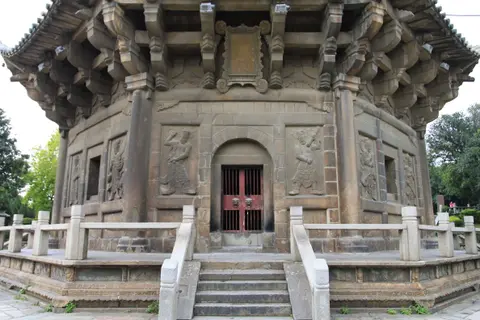 开元寺Kaiyuan TempleQuanzhou’s great Buddhist temple, founded in the late 7th century, with a vast main hall and twin 13th-century stone pagodas over 40 metres high; behind the hall stand pillars carved for a Hindu temple. A UNESCO component site.
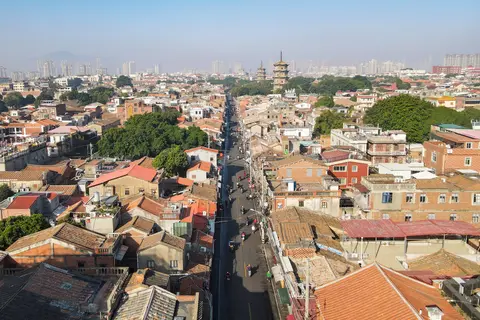 西街West StreetOne of Quanzhou’s oldest streets, running from the Bell Tower past Kaiyuan Temple: low arcaded houses, snack stalls, tea shops and cafés, with the temple pagodas rising above the roofs.
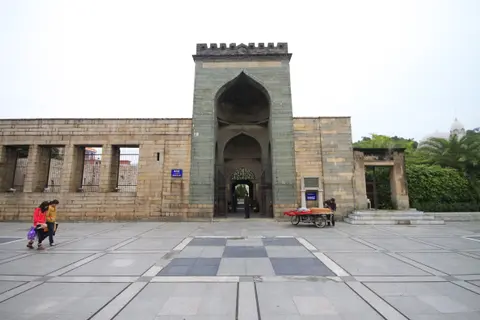 清净寺Qingjing MosqueOne of the oldest mosques in China, founded in 1009 by Arab merchants: a tall granite gateway in Middle Eastern style and the roofless walls of the old prayer hall. A UNESCO component site.
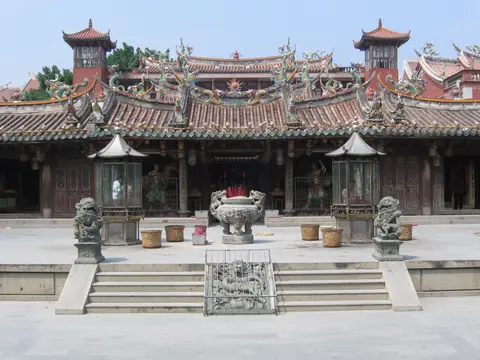 通淮关岳庙Tonghuai Guanyue TempleA busy folk temple to the war heroes Guan Yu and Yue Fei, with ornate swallowtail roofs, clouds of incense and a constant stream of worshippers — the liveliest temple in the old town.
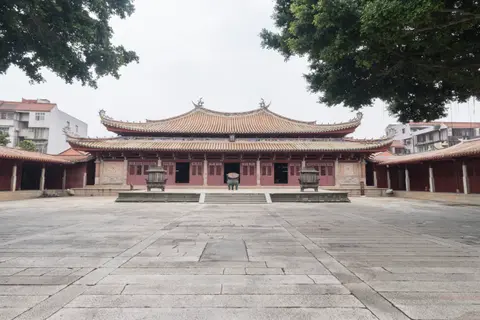 泉州府文庙Quanzhou Confucius Temple and SchoolThe old prefectural Confucian temple and school, with a grand Song-style Hall of Great Achievement facing a wide stone-paved square; a UNESCO component site and a quiet contrast to the busy streets around it.
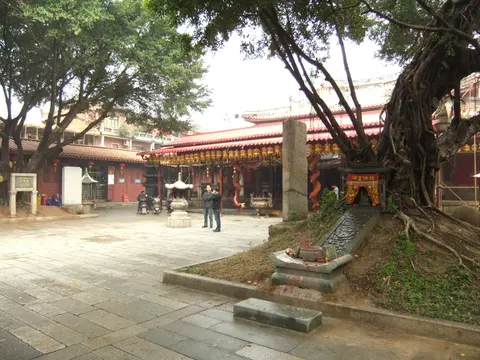 泉州天后宫Quanzhou Tianhou Temple (Mazu Temple)A temple to Mazu, protector of seafarers, first built in 1196 near the old south gate and harbour; among the oldest and highest-ranking Mazu temples anywhere. The excavated Deji Gate city-wall site lies just across the road.
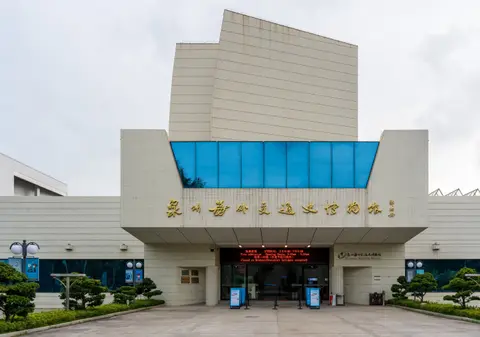 泉州海外交通史博物馆Quanzhou Maritime MuseumChina’s main museum of maritime trade history, founded in 1959: ship models, Arabic, Syriac and Tamil gravestones and inscriptions that show how many peoples and faiths lived in medieval Quanzhou.
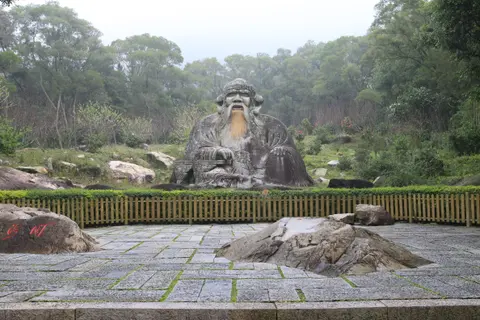 老君岩Laojun Rock (Statue of Laozi), Qingyuan MountainA huge seated Laozi carved from a single granite boulder in the Song dynasty, about 5 metres high and smiling under the trees at the foot of Qingyuan Mountain; a UNESCO component site. Trails continue up the mountain to temples and rock inscriptions.
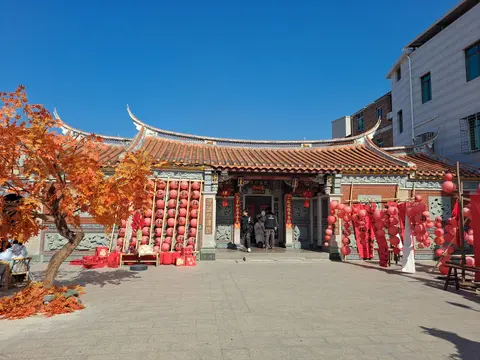 蟳埔村Xunpu Fishing VillageA fishing village at the mouth of the Jin River, famous for its houses walled with oyster shells and for the women’s hair garlands of fresh flowers (zanhua), a tradition now listed as national intangible heritage.
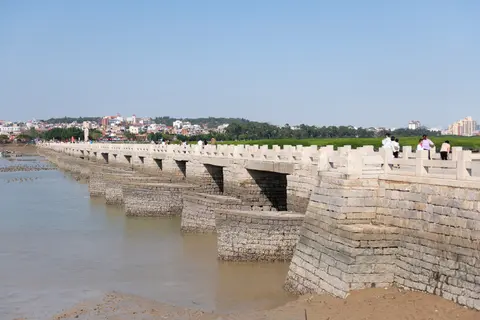 洛阳桥Luoyang BridgeA granite beam bridge across the Luoyang River estuary, built 1053–1059 under the official Cai Xiang — its piers were bound by cultivated oysters. Still walkable, with Song statues and steles; a UNESCO component site.
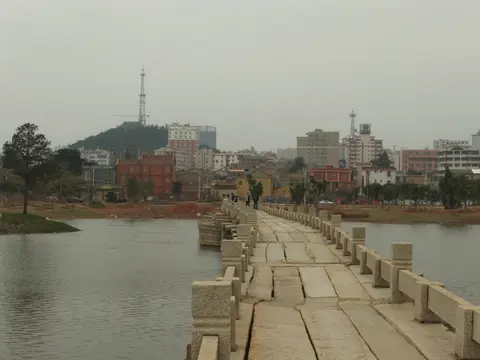 安平桥Anping Bridge (Five-Li Bridge)Built 1138–1151 and over 2 km long, this flat granite bridge was for centuries the longest in China; it crosses the tidal flats at Anhai with five pavilions along the way. A UNESCO component site.
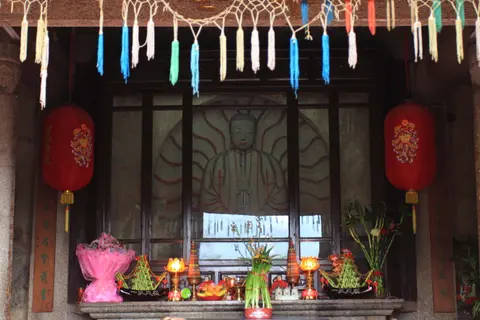 草庵Cao’an Manichaean TempleA small hillside stone shrine holding a 14th-century relief of Mani, the founder of Manichaeism, shown as the “Buddha of Light” — believed to be the only surviving Manichaean statue of its kind in the world. A UNESCO component site.
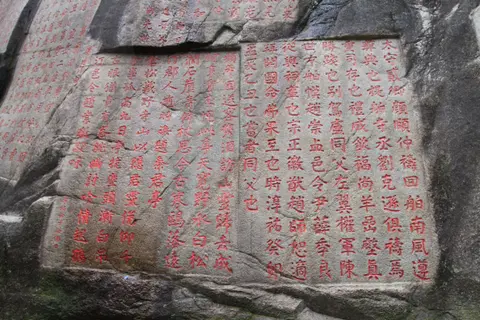 九日山Jiuri Mountain (Wind-Praying Inscriptions)A low wooded hill where Song officials held ceremonies praying for fair winds for the trading fleets and recorded them on the rocks; ten of these inscriptions survive among dozens of others. A UNESCO component site.
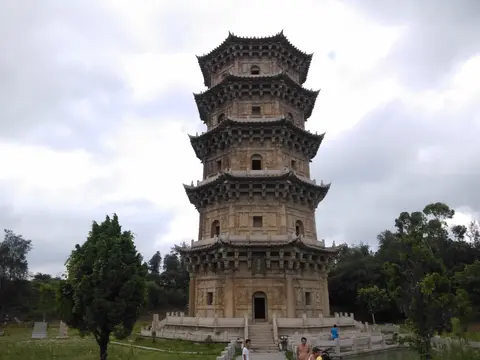 六胜塔Liusheng Pagoda and Shihu DockA 14th-century octagonal stone pagoda, about 36 metres tall, that served as a landmark for ships entering Quanzhou Bay; the old granite Shihu dock lies nearby on the shore. Both are UNESCO component sites.
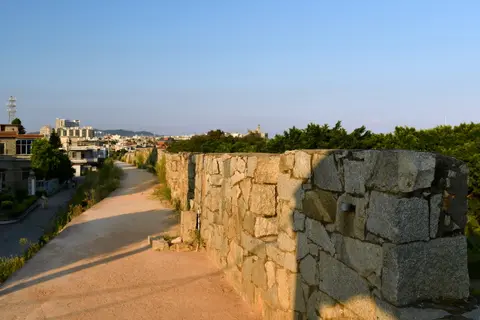 崇武古城Chongwu Ancient CityA granite-walled coastal fortress built in 1387 against pirates, on a headland of Hui’an County; inside are fishing lanes, and along the shore a stone-sculpture park and rocky beaches. Hui’an is also famous for its stone carvers.
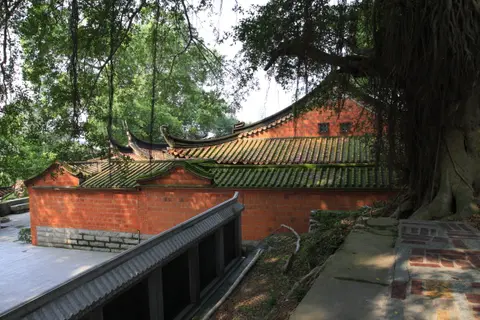 真武庙Zhenwu TempleThe Taoist temple where Song and Yuan officials made sacrifices to the sea, one of Quanzhou’s 22 World Heritage sites, on a hillside at the old port.德济门遗址Deji Gate RuinsThe excavated remains of old Quanzhou’s southern city gate, one of the 22 World Heritage sites, in the old town.灵山伊斯兰教圣墓Lingshan Islamic TombsTwo old Muslim tombs under a stone pavilion on Lingshan, part of Quanzhou’s World Heritage listing, with stone tablets from 1322 and 1417.
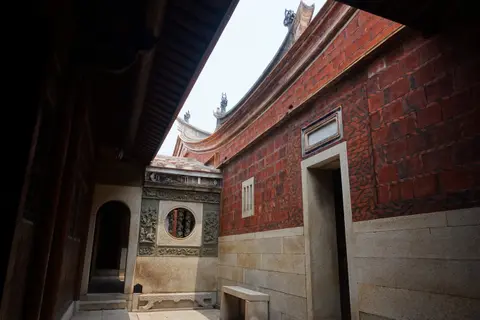 蔡氏古民居Cai Family Old Houses (Nan’an)A late Qing group of 23 buildings raised by a merchant family with businesses in the Philippines, known for its stone, wood, brick and clay carving.
Hidden spots
Not ticketed sights: corners, objects, graves and viewpoints that travellers seek out.
Map
What to eat here
Find a pharmacy, ATM, food or any shop nearby in Chinese
Places added by travelers
Add a placeFrom other travelers
Write a reviewAsk about this page
Stuck on something? Ask here. Our team answers within 24 hours and emails you the answer.
Questions are public (your email is not). We check them before they appear.
Coming to this page
- Hotels, tickets and experiences you can bookComing soon
Routes that include Quanzhou
Travel guides
Stories about this place
Nearby cities
- Chaozhou 1 h 35 min–2 h 10 min · High-speed train
- Fuzhou 35–55 min · High-speed train
- Putian 18–40 min · High-speed train
- Xiamen 20–40 min · High-speed train
- Zhangzhou 40 min–1 h 10 min · High-speed train
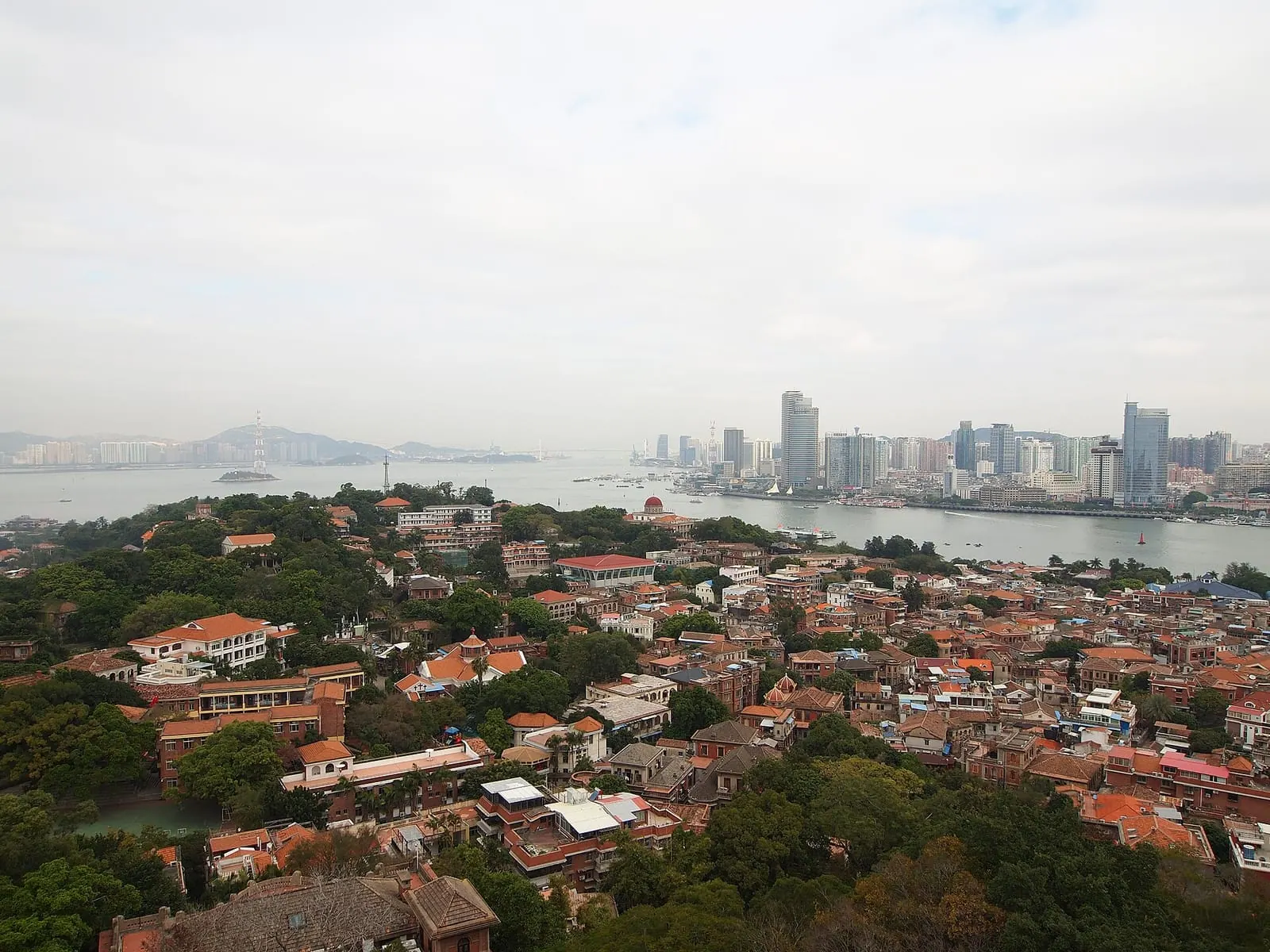 2 daysXiamen厦门Car-free Gulangyu island and Minnan street food.
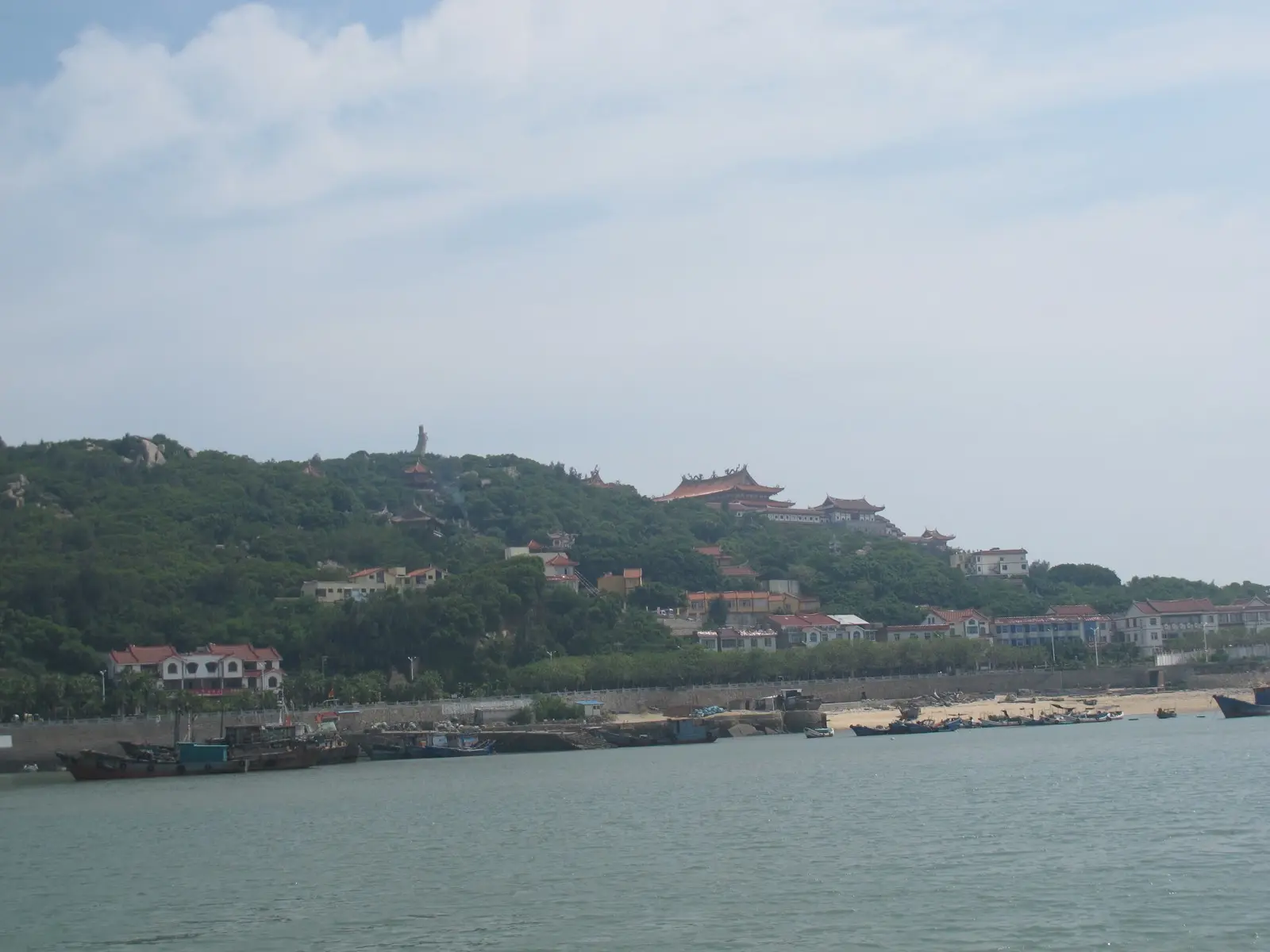 1–2 daysPutian莆田Coastal Fujian city between Fuzhou and Xiamen, home of the sea goddess Mazu; ferry to her temple on Meizhou Island.
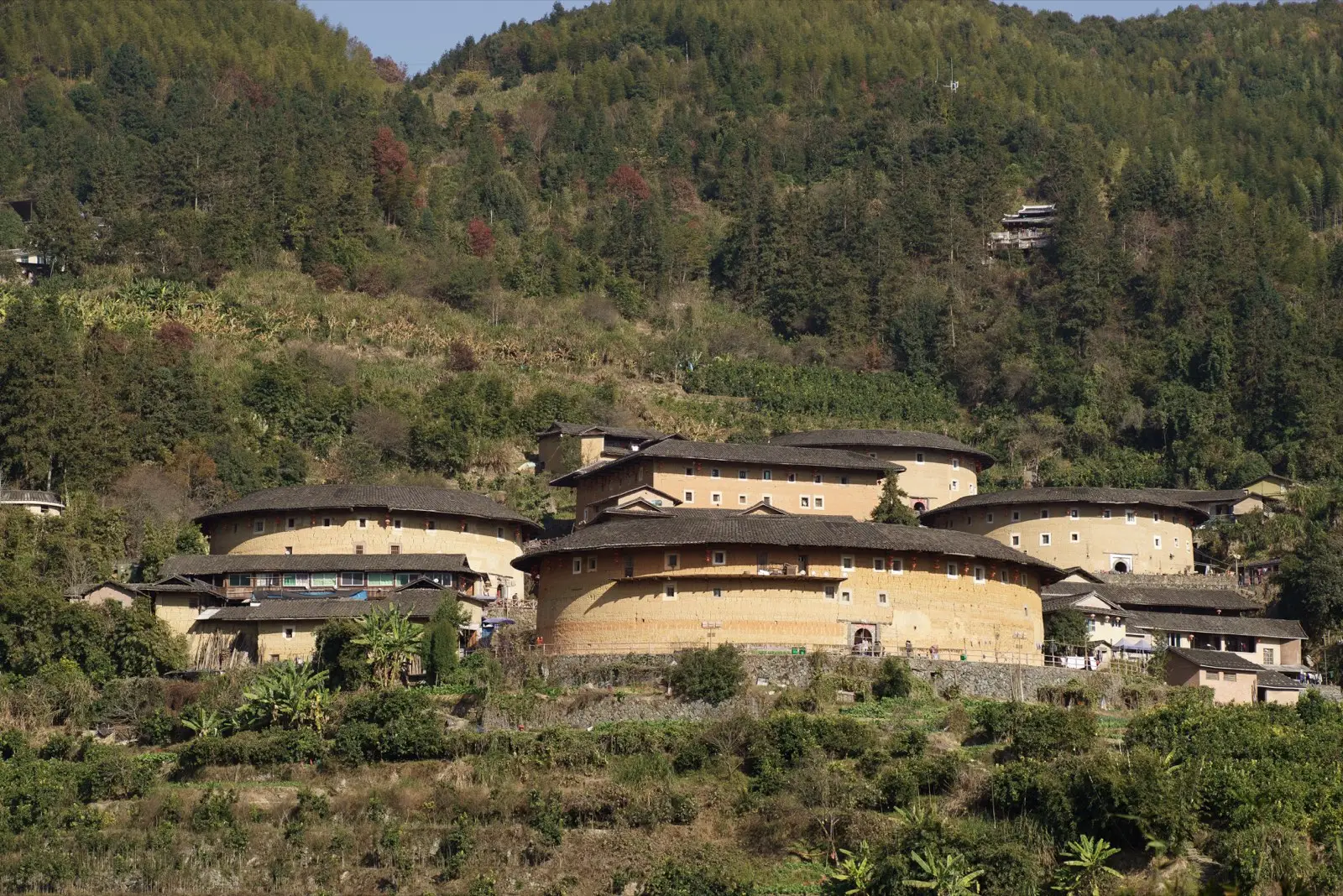 1–2 daysZhangzhou漳州Minnan city west of Xiamen and the gateway to the Nanjing County tulou, the UNESCO-listed round earthen clan houses in the hills.
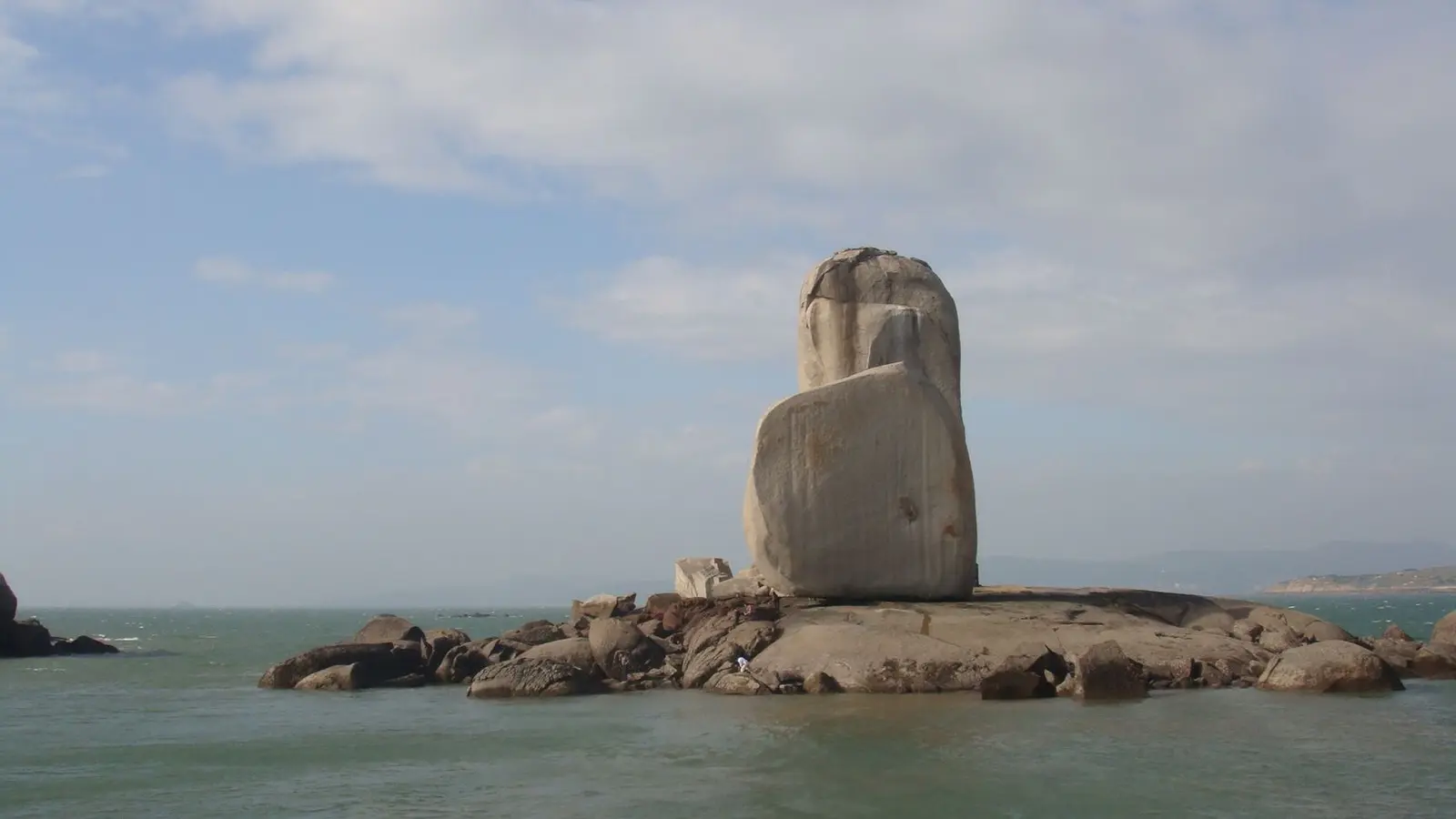 1–2 daysPingtan平潭Fujian's windswept granite island: sea-stack rocks, stone-house villages, long beaches and spring blue tears; 40 min from Fuzhou.