
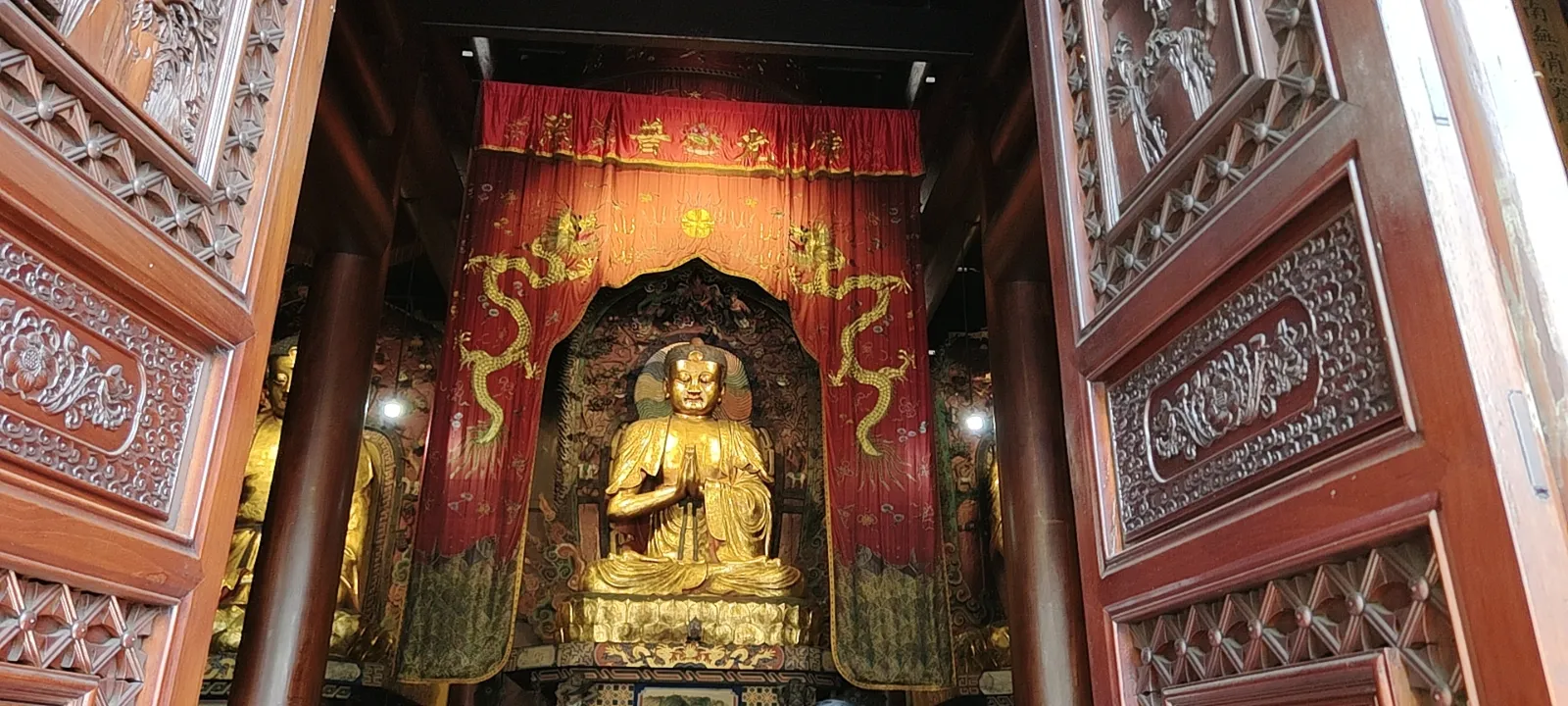
Lingyun Temple
凌云寺 · Língyún Sì
The Chan temple on the hill beside the Buddha’s head, also called Dafo Temple. It dates from the Kaiyuan era of the Tang dynasty, and was destroyed by war and rebuilt several times; the present rebuilding dates from 1667.
Booking recommendedBring your passport30–45 minutes
Tip
Fit it in before or after the cliff stairs: the ticket is the same, and the temple is on top of the hill near the Buddha’s head.
- Opening hours
- Same as the Giant Buddha daytime ticket.
- Price
- Included in the ¥80 Giant Buddha walking ticket
- How to book
- Covered by the Giant Buddha ticket; book that with your passport.
- Getting there
- On top of Lingyun Hill: walk from the Buddha’s head, inside the scenic area.
- Address in Chinese
- 四川省乐山市市中区凌云山
Photo: Fumikas Sagisavas · CC0
Was this page useful?
From other travelers
Write a reviewAsk about this page
Stuck on something? Ask here. Our team answers within 24 hours and emails you the answer.
Questions are public (your email is not). We check them before they appear.
Sources
Checked against these sources on 2026-11-04. Rules change often, so confirm on the official site before you go. By the Zouzou editorial team
More in Leshan
乐山大佛Leshan Giant BuddhaA 71-metre seated Maitreya cut into a red sandstone cliff where three rivers meet. The monk Haitong began it in 713 to calm the dangerous water, and it took about 90 years. UNESCO listed it with Mount Emei in 1996.乐山大佛游船Giant Buddha sightseeing boatA short river trip that stops in front of the Buddha. It is the only way to see the whole figure at once, and it does not include the park.乌尤寺Wuyou TempleA hilltop Chan temple at the meeting of the three rivers, next to the Buddha. It began as Zhengjue Temple in the Tang dynasty, took its present name in the Song, and has an Arhat Hall with 500 figures and the Erya Terrace with river views.麻浩崖墓Mahao Cliff TombsMostly Eastern Han tombs cut into the south slope of Lingyun Hill, next to the Buddha. Counts differ: a 1985 local survey found 330, one guide says over 544. A small seated Buddha above one entrance is considered among the earliest Buddhist images in China.