
Hong Kong and Macau to mainland China: trains, borders and visas
Cross from Hong Kong or Macau into mainland China: high-speed rail, Lo Wu, the bridge shuttle bus and Gongbei, plus visas, money and SIMs.
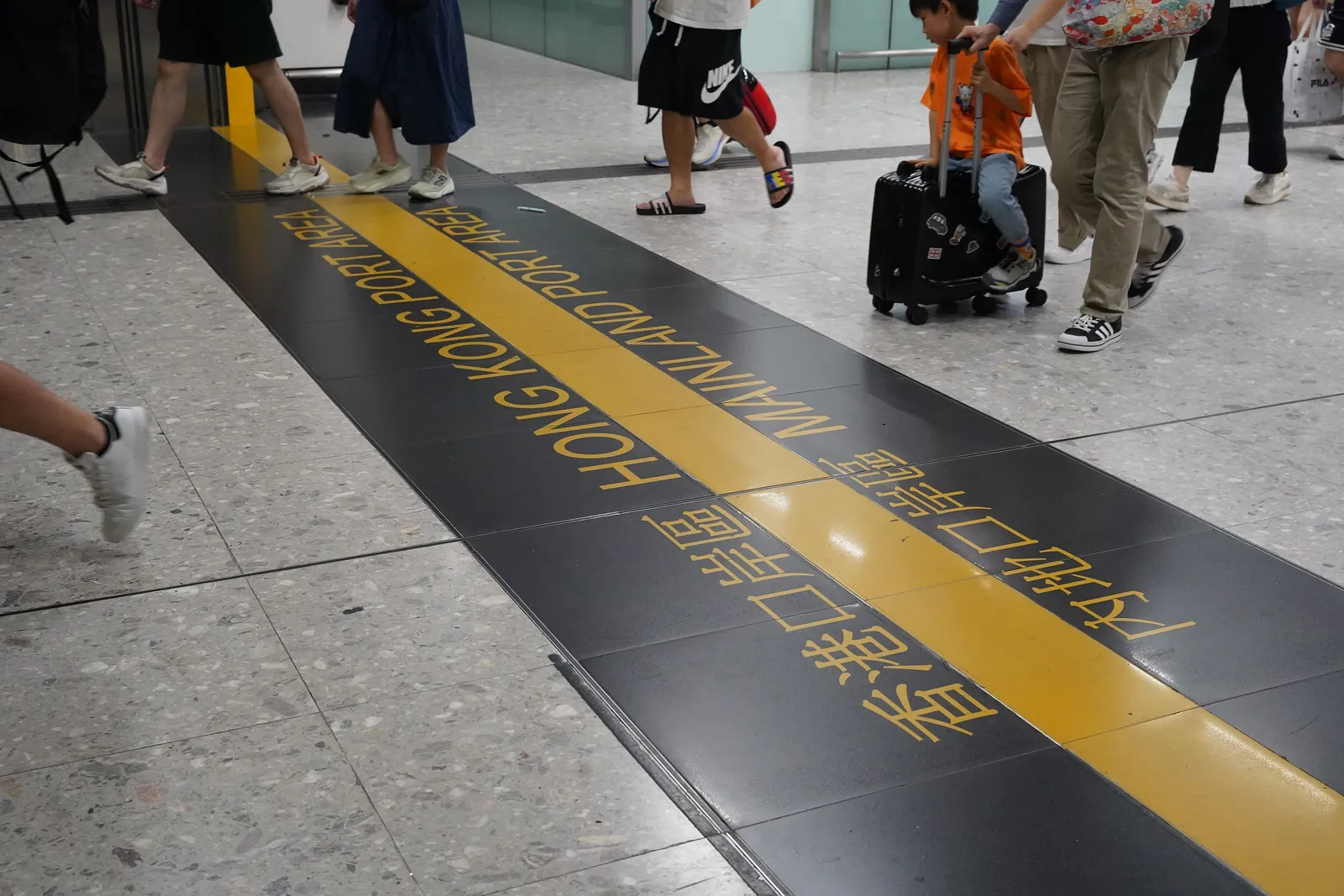
Many trips to China start in Hong Kong or Macau. Getting into the mainland is quick and cheap, but it is a real border: you leave one immigration system and enter another, with different rules for visas, money and the internet. This guide covers the main crossings and what changes on the other side.
Visas: three separate systems
Hong Kong, Macau and mainland China each run their own immigration. A mainland visa or visa-free entry does not cover Hong Kong or Macau, and the reverse is also true. Most European, North American and Australian travelers can visit Hong Kong and Macau without a visa; check how long your passport allows with the Hong Kong Immigration Department or Macau’s Public Security Police.
For the mainland there are three main options:
- 30-day visa-free entry, if your country is on China’s list (see who gets visa-free entry). It works at every land crossing, station and airport.
- 240-hour visa-free transit (see our guide). Hong Kong and Macau count as separate regions, so Hong Kong to Shanghai and on to Seoul works, but Hong Kong to Guangzhou and back to Hong Kong does not. Watch the port: as of September 2026, the designated entry ports near Hong Kong and Macau are West Kowloon station, the Zhuhai port of the Hong Kong–Zhuhai–Macao Bridge, Hengqin, and the ferry terminals at Shekou, Nansha, Pazhou and Zhongshan. The busy walk-across crossings at Lo Wu, Lok Ma Chau (Futian), Shenzhen Bay and Gongbei are not on the entry list, although you may leave through them.
- Guangdong group entry. Citizens of countries that have diplomatic relations with China can enter from Hong Kong or Macau without a visa on a tour run by a travel agency registered there, in a group of at least two that enters and leaves together. The group can stay up to six days in Guangzhou, Shenzhen, Zhuhai, Foshan, Dongguan, Zhongshan, Jiangmen, Huizhou, Zhaoqing and Shantou.
If you need a visa, remember that every side trip to Hong Kong or Macau is an exit from the mainland. A single-entry visa is used up when you leave, so ask for double or multiple entry if you will go back and forth. Check your own case in our visa checker; these rules change often, so check again before you go.
High-speed rail from West Kowloon
The fastest way in is the high-speed train from Hong Kong West Kowloon station. Under the co-location arrangement you clear Hong Kong departure and mainland entry inside the same station before boarding, so you step off in China as a domestic passenger. Futian in central Shenzhen is under 20 minutes away, Guangzhou South about 50 minutes, and there are direct trains to more than 100 mainland stations, including sleeper trains to Beijing and Shanghai.
- Buy tickets with your passport on the MTR High Speed Rail website or app, on 12306, through ticket agents or at the station. See how to book train tickets.
- Ticket, security and immigration checks open 90 minutes before departure and close 30 minutes before. The whole process usually takes 30–45 minutes, so arrive at least 45 minutes early.
- Bring the same passport you used to book. More on the trains in our high-speed train guide.
MTR East Rail: Lo Wu and Lok Ma Chau
The cheapest way to Shenzhen is the MTR East Rail Line to the border, then a walk across:
- Lo Wu (06:30 to midnight) takes you to Luohu, the end of Shenzhen Metro Line 1, next to Shenzhen railway station.
- Lok Ma Chau (06:30–22:30) takes you to Futian Checkpoint, on Shenzhen Metro Lines 4 and 10.
You pass Hong Kong departure, walk across the bridge, then go through mainland entry. On weekends and holidays the queues can be long. Trains from Shenzhen to Guangzhou and beyond leave from Shenzhen North and Futian; see our Shenzhen page.
Shenzhen Bay and other road crossings
Shenzhen Bay Port (06:30 to midnight) suits you if you are in the western New Territories or heading to Nanshan or Shekou in Shenzhen. Both sides’ immigration is in one building, so there is no walk between them. Local buses and cross-boundary coaches from urban Hong Kong go there. The Lok Ma Chau (Huanggang) road crossing is open 24 hours, mostly for coach passengers.
The Hong Kong–Zhuhai–Macao Bridge
The bridge links Hong Kong, near the airport, with Zhuhai and Macau. Take bus B6 from Tung Chung or B4 from the airport area to Hong Kong Port, clear Hong Kong immigration, then board the shuttle bus. Shuttles run 24 hours, every 5 minutes at peak times and every 15–30 minutes overnight, to either Zhuhai Port or Macao Port. The fare is HK$65 by day and HK$70 after midnight. The Zhuhai side is a 240-hour entry port. Cross-boundary coaches also run from urban Hong Kong straight to Zhuhai, Zhongshan and other cities.
From Macau into Zhuhai
- Border Gate to Gongbei (06:00–01:00) is the main crossing, on foot. Zhuhai station, with trains to Guangzhou South, is right outside.
- Hengqin Port can be reached on the Macau Light Rail Hengqin line and uses a single joint check. It runs around the clock according to Zhuhai port information, but check before a late-night crossing. It is also a 240-hour entry port.
- Qingmao, a newer crossing near Gongbei, is not open to foreign passports.
Money, payments and phones
Each place has its own currency: Hong Kong dollars, Macau patacas and Chinese yuan (RMB). Hong Kong dollars are widely accepted in Macau, but yuan is usually not accepted in Hong Kong shops. Your Octopus card works only in Hong Kong. In the mainland almost everything, including the metro, is paid with Alipay or WeChat Pay, so set them up before you cross (see how to pay in China). Carry some yuan cash as a backup; changing money in Hong Kong is easy. See cash, ATMs and cards.
The internet changes at the border too. Google, WhatsApp and many foreign apps work in Hong Kong and Macau but are blocked in the mainland. A Hong Kong SIM or travel eSIM that roams in the mainland usually routes your data through its home network, so those apps keep working, but plans and roaming prices vary. Check before you buy; see the best eSIM for China and Google and WhatsApp in China.
Which crossing to choose
- Guangzhou or farther: high-speed rail from West Kowloon.
- Shenzhen on a budget: East Rail to Lo Wu or Lok Ma Chau.
- Zhuhai or Macau: the bridge shuttle bus.
- Using the 240-hour rule: a designated entry port such as West Kowloon or the bridge.
Our Hong Kong, Guangzhou and Guilin route shows how to fit it into a trip, and the Guangzhou page has station tips.
Sources
- MTR High Speed Rail: departure process at Hong Kong West Kowloon (highspeed.mtr.com.hk)
- Hong Kong Immigration Department: control points and opening hours (immd.gov.hk)
- Hong Kong-Zhuhai-Macao Bridge (HKSAR Government): cross-boundary public transport (hzmb.gov.hk)
- NIA: Visa-free transit policies (en.nia.gov.cn)
- NIA: regional visa-free entry policies, incl. foreign tour groups from Hong Kong and Macao to Guangdong (Chinese) (nia.gov.cn)
- Guangdong Provincial Government: Hengqin Port 24-hour clearance (gd.gov.cn)
Checked against these sources on 2026-09-27. Rules change often, so confirm on the official site before you go.
Read next
More on Getting around
 How to book train tickets in China as a foreigner (2026)Register on 12306 with your passport, book up to 15 days ahead, board with your passport. Seat classes, Trip.com, refunds and changes.
 How to use DiDi in China as a foreigner (2026)DiDi app or DiDi inside Alipay, paying with a foreign card, showing your address in Chinese, airport pickups, safety features and Amap as an option.
 China high-speed train guide: stations, boarding and luggageG, D and C trains, which station you need, when to arrive, passport and security checks, luggage limits, food on board and typical journey times.