
China high-speed train guide: stations, boarding and luggage
G, D and C trains, which station you need, when to arrive, passport and security checks, luggage limits, food on board and typical journey times.
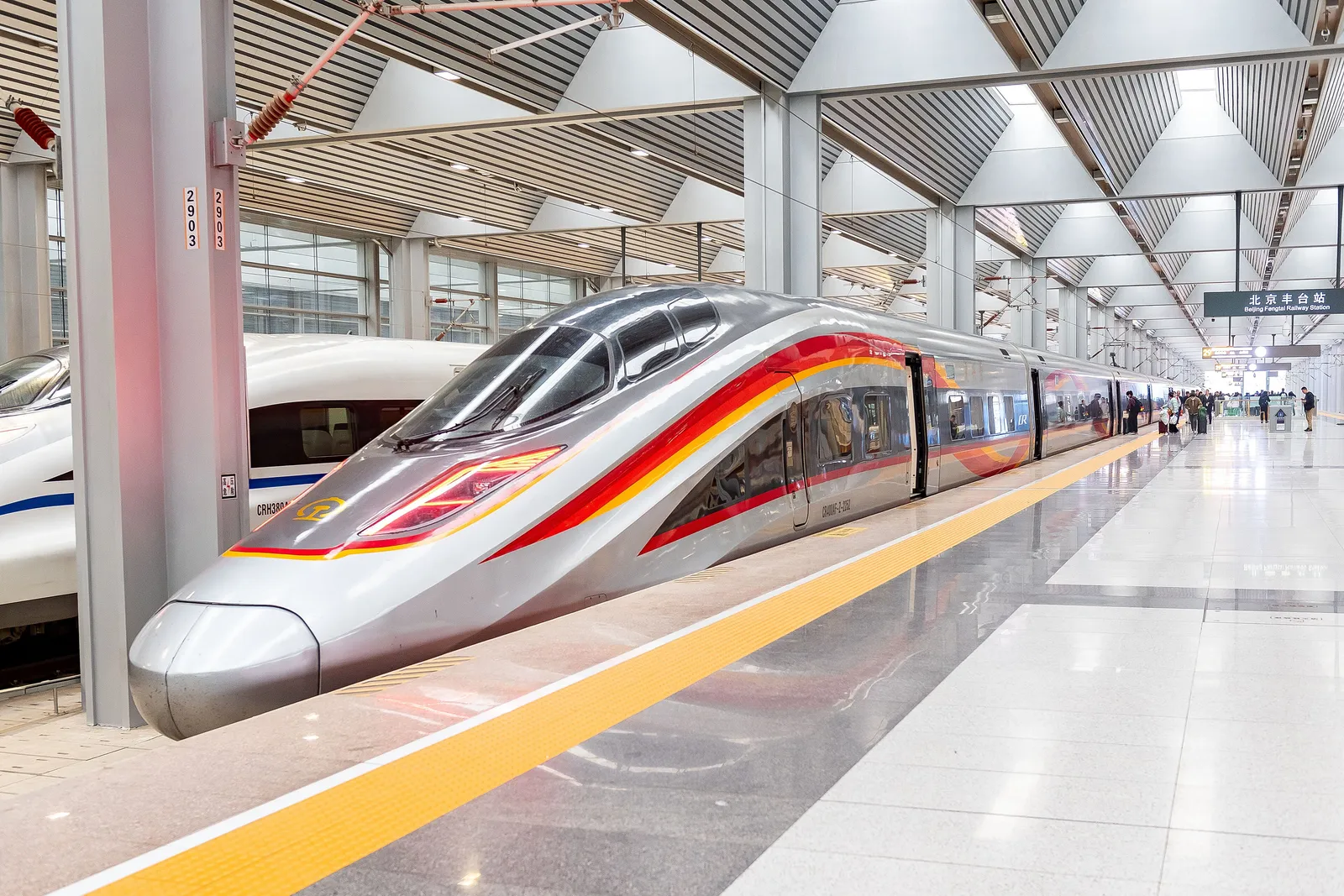
China has the world’s largest high-speed rail network, and for trips under about six hours it is usually faster and calmer than flying. Stations work a little like airports, though, so it helps to know the routine before your first trip.
G, D and C trains
The letter at the start of the train number tells you the type:
- G: the fastest high-speed trains, up to 350 km/h on the main lines.
- D: high-speed but usually slower, with more stops. Some run overnight with sleeper berths.
- C: short intercity trains, for example to nearby towns and airports.
Older letters (K, T, Z) are slower conventional trains, often overnight. For how to buy tickets, see how to book train tickets in China.
Check the station name
Many cities have several big stations, often far apart. Beijing has Beijing South, Beijing West, Beijing North, Beijing Chaoyang and more; Shanghai has Hongqiao and Shanghai station; Xi’an’s high-speed trains mostly use Xi’an North; Chengdu has East, South and West. The station is printed on your booking. Show the Chinese name to your taxi or DiDi driver, and allow time: some high-speed stations are 30 to 60 minutes from the centre.
Arrive early
Plan to be at the station 45 to 60 minutes before departure, more at big stations or on Chinese holidays. You need time for:
- Passport check at the entrance. Scan your passport at the gate or show it to staff.
- Security. Bags go through an X-ray machine and you walk through a scanner, as at an airport.
- Finding your gate. Screens in the waiting hall show your train number and gate (for example A12). They are in Chinese and English.
Boarding usually starts 15 to 20 minutes before departure. You scan your passport again at the gate and walk down to the platform. Gates close a few minutes before departure, usually 3 to 5, and at some stations earlier.
On the platform and on board
Coach numbers are marked on the platform floor, so wait at your coach number. The train stops only for a couple of minutes at intermediate stations. Seats and coach numbers are on your booking; announcements and displays inside are in Chinese and English.
Luggage
There is no check-in. You carry your bags on board and put them on the overhead rack or in the space at the end of the coach. The official free allowance is 20 kg per adult, and on high-speed trains each item should be no more than 130 cm in length + width + height. Large suitcases fit at the coach ends, but space fills up, so board promptly. Staff rarely weigh bags. Lighters, fireworks and other dangerous goods are banned.
Food and drink
There is hot water on every train for tea or instant noodles. Most G trains have a dining car and a trolley with drinks, snacks and boxed meals. Stations have plenty of shops and fast food. Many travellers bring their own snacks, which is completely normal.
Typical journey times
- Beijing to Shanghai: about 4.5 to 6 hours (the fastest trains take just over 4 hours).
- Beijing to Xi’an: 4.5 to 6 hours.
- Xi’an to Chengdu: 3 to 3.5 hours.
- Chengdu to Chongqing: 1 to 1.5 hours.
- Shanghai to Suzhou: 25 to 40 minutes; Shanghai to Hangzhou: 45 to 60 minutes.
- Guangzhou to Guilin: 2.5 to 3 hours.
For longer legs such as Xi’an to Shanghai or Beijing to Guilin, flying can be faster. Our routes list the best transport for each leg.
Sources
- 12306 China Railway FAQ (English) (12306.cn)
- CNR: how early do stations stop ticket checks (Chinese) (news.cnr.cn)
- Trip.com: China train luggage allowance (ca.trip.com)
- Travel China Guide: Beijing–Shanghai high-speed trains (travelchinaguide.com)
Checked against these sources on 2026-09-27. Rules change often, so confirm on the official site before you go.
Read next
More on Getting around
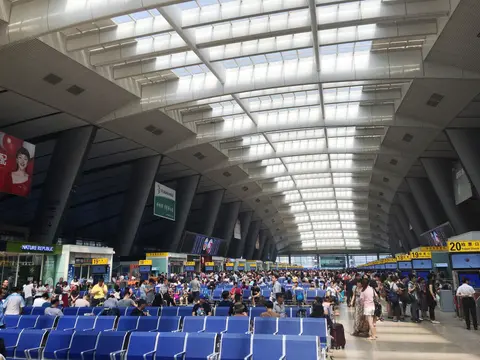 How to book train tickets in China as a foreigner (2026)Register on 12306 with your passport, book up to 15 days ahead, board with your passport. Seat classes, Trip.com, refunds and changes.
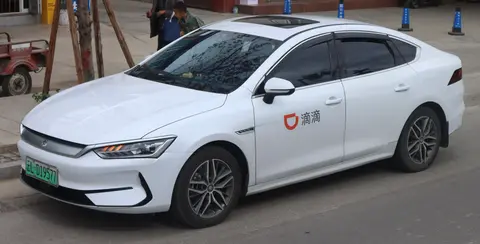 How to use DiDi in China as a foreigner (2026)DiDi app or DiDi inside Alipay, paying with a foreign card, showing your address in Chinese, airport pickups, safety features and Amap as an option.
 How to take a taxi in China: DiDi, ranks, fares and scamsHail a cab or use DiDi, show your address in Chinese, insist on the meter, avoid airport touts and pay with Alipay or WeChat.