
How to take a taxi in China: DiDi, ranks, fares and scams
Hail a cab or use DiDi, show your address in Chinese, insist on the meter, avoid airport touts and pay with Alipay or WeChat.
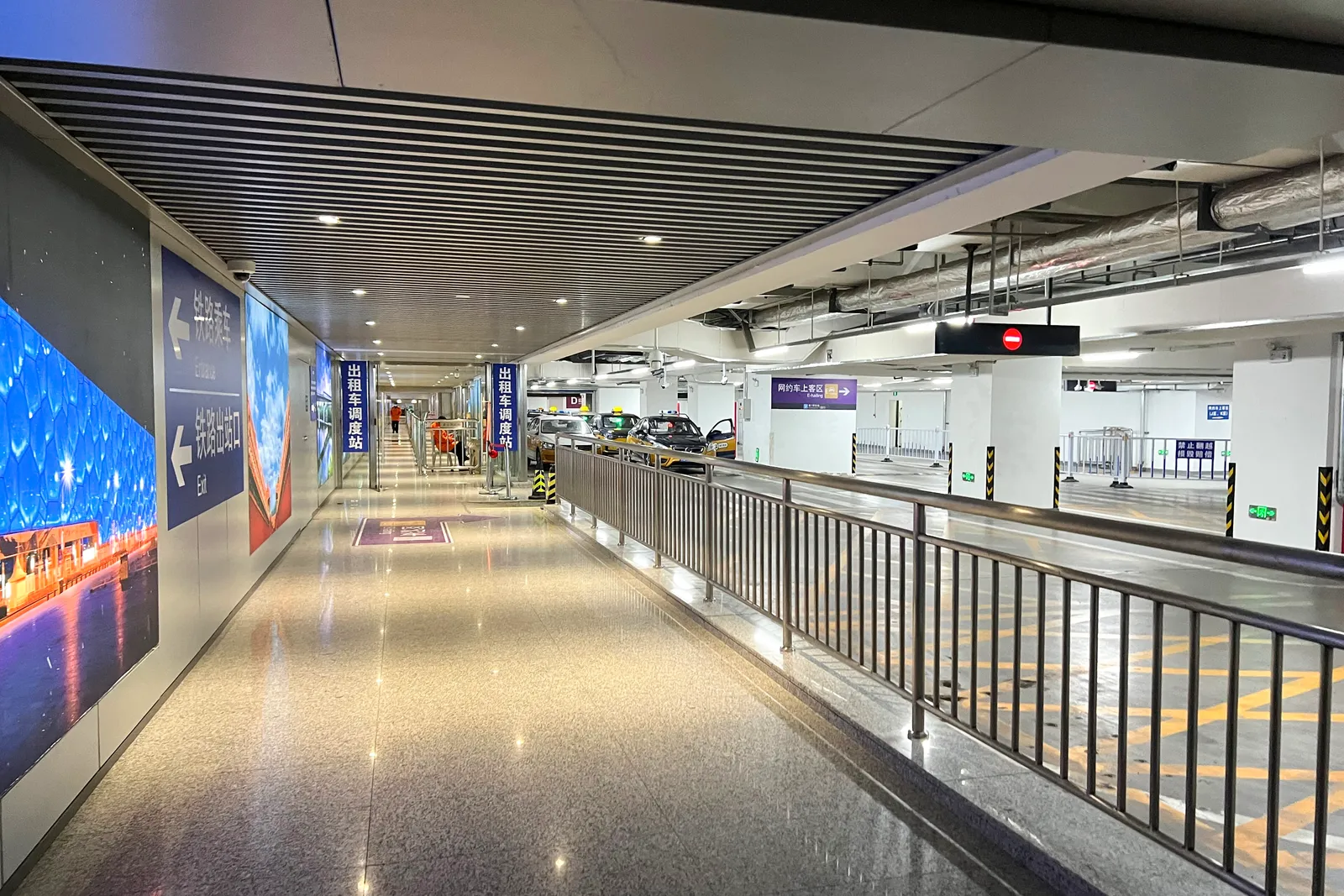
Taxis in China are cheap by Western standards and easy to find in big cities. The two things that trip visitors up are language and payment. Both are easy to solve before you get in the car.
Street taxi or DiDi?
You can wave down a taxi on the street, but most people in China now order one through an app. DiDi is the main ride-hailing app. It has an English version, works with your own phone number and card, and can also be opened inside Alipay if your card is declined. You type the destination in English, see the price estimate, and the driver gets the Chinese address automatically. Amap (Gaode) also lets you book taxis in English. See our apps page for what to install.
On the street, an available taxi usually shows a lit sign or a red “空车” (empty) light in the windscreen. At rush hour, in rain and late at night, street taxis are hard to get, and DiDi is much easier.
Show the address in Chinese
Most drivers speak little or no English, and they cannot read Latin-script addresses. Always have your destination written in Chinese: the hotel card from reception, a screenshot, or the Chinese name from a map app. On Zouzou, every sight has a Chinese address you can show full screen to the driver.
Meters, fares and receipts
Official taxis use a meter. In Beijing, for example, the flag fall is ¥13 for the first 3 km, then ¥2.3 per km, with a higher rate from 23:00 to 05:00 and extra charges for waiting in slow traffic. Tolls are paid by the passenger. Other cities have similar prices. If a driver will not use the meter and asks for a fixed price instead, get out and find another car.
Ask for a receipt (fāpiào, 发票) if you want one. It shows the taxi’s number, which you need if you leave something in the car or want to complain. In Beijing, the complaints line is (010) 96103 or 96106.
Airport and station scams
The most common problem is at airports and railway stations. People inside the arrivals hall ask “Taxi? Taxi?” and lead you to an unlicensed car with no meter, then charge several times the normal fare. Ignore them.
- Follow the signs to the official taxi rank outside arrivals and queue there.
- Or book a DiDi and meet the driver at the marked pick-up point.
- A real taxi has a company name on the doors, a roof light and a visible meter.
Our city pages list typical fares from each airport, for example Beijing and Shanghai, so you know roughly what to expect. For many airports the metro or airport express is cheaper and just as fast; see using the metro in China.
Paying
Almost every taxi accepts Alipay and WeChat Pay: scan the QR code on the back of the seat or show your payment code. Cash still works, but drivers may not have change for large notes. DiDi charges the card or wallet linked to your account automatically. Set up payments before you arrive; see how to pay in China.
A few more tips
- Sit in the back and wear a seatbelt.
- At busy times, booking ahead on DiDi is often faster than waiting at the kerb.
- Keep your phone charged: if you get lost, you can call a driver or open your map to show where you are.
Sources
- Beijing Municipal Government: taxi fares and hotlines (english.beijing.gov.cn)
- Visit Beijing: taxi (english.visitbeijing.com.cn)
Checked against these sources on 2026-09-27. Rules change often, so confirm on the official site before you go.
Read next
More on Getting around
 How to book train tickets in China as a foreigner (2026)Register on 12306 with your passport, book up to 15 days ahead, board with your passport. Seat classes, Trip.com, refunds and changes.
 How to use DiDi in China as a foreigner (2026)DiDi app or DiDi inside Alipay, paying with a foreign card, showing your address in Chinese, airport pickups, safety features and Amap as an option.
 China high-speed train guide: stations, boarding and luggageG, D and C trains, which station you need, when to arrive, passport and security checks, luggage limits, food on board and typical journey times.