
Classical Chinese gardens
中国古典园林Zhōngguó Gǔdiǎn Yuánlín
Miniature landscapes of water, rocks, plants and pavilions, shaped by poetry and painting and best seen in Suzhou.
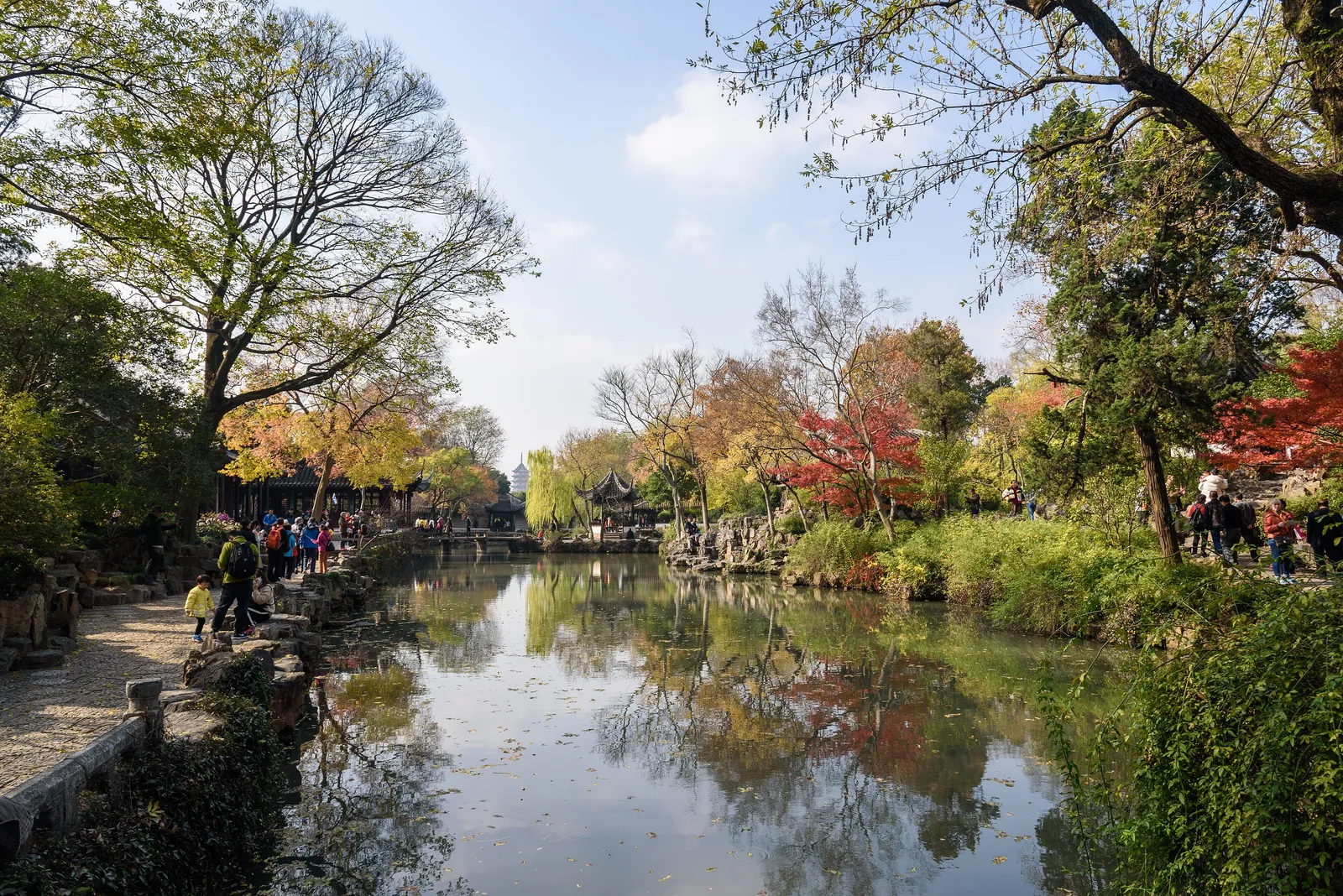
Classical Chinese gardens are designed as miniature natural worlds, using water, rocks, plants, paths and buildings to frame changing views. The best-known private examples developed in Suzhou, where scholar-owners connected garden scenes with poetry, painting and calligraphy. Their layouts are intentionally indirect: walls, windows and winding corridors reveal one composition at a time, making a small site feel larger. Travellers can compare Suzhou’s private gardens with Beijing’s Summer Palace, an imperial garden built on a much greater scale.
Also known as: Chinese classical gardens
Where to see it in China

Related entries
Ideas and beliefsFeng shui 风水The traditional Chinese practice of siting houses, palaces, cities and tombs in harmony with hills, water and the flow of qi.Places and buildingsSiheyuan 四合院The traditional Chinese courtyard house: buildings on four sides of an inner courtyard, closed to the street, home to an extended family.DynastiesMing dynasty 明朝The dynasty (1368–1644) that built the Forbidden City and most of the Great Wall seen today, ruling first from Nanjing and then Beijing.
Sources
- Classical Gardens of Suzhou — UNESCO World Heritage Centre (whc.unesco.org)
- Suzhou gardens conservation — Suzhou Municipal Government (english.suzhou.gov.cn)