
Travelling in China at Chinese New Year and Golden Week
Holiday dates for 2026–27, the 40-day spring travel rush, 15-day train sales, what closes at New Year, sight caps, fireworks and crowd tips.
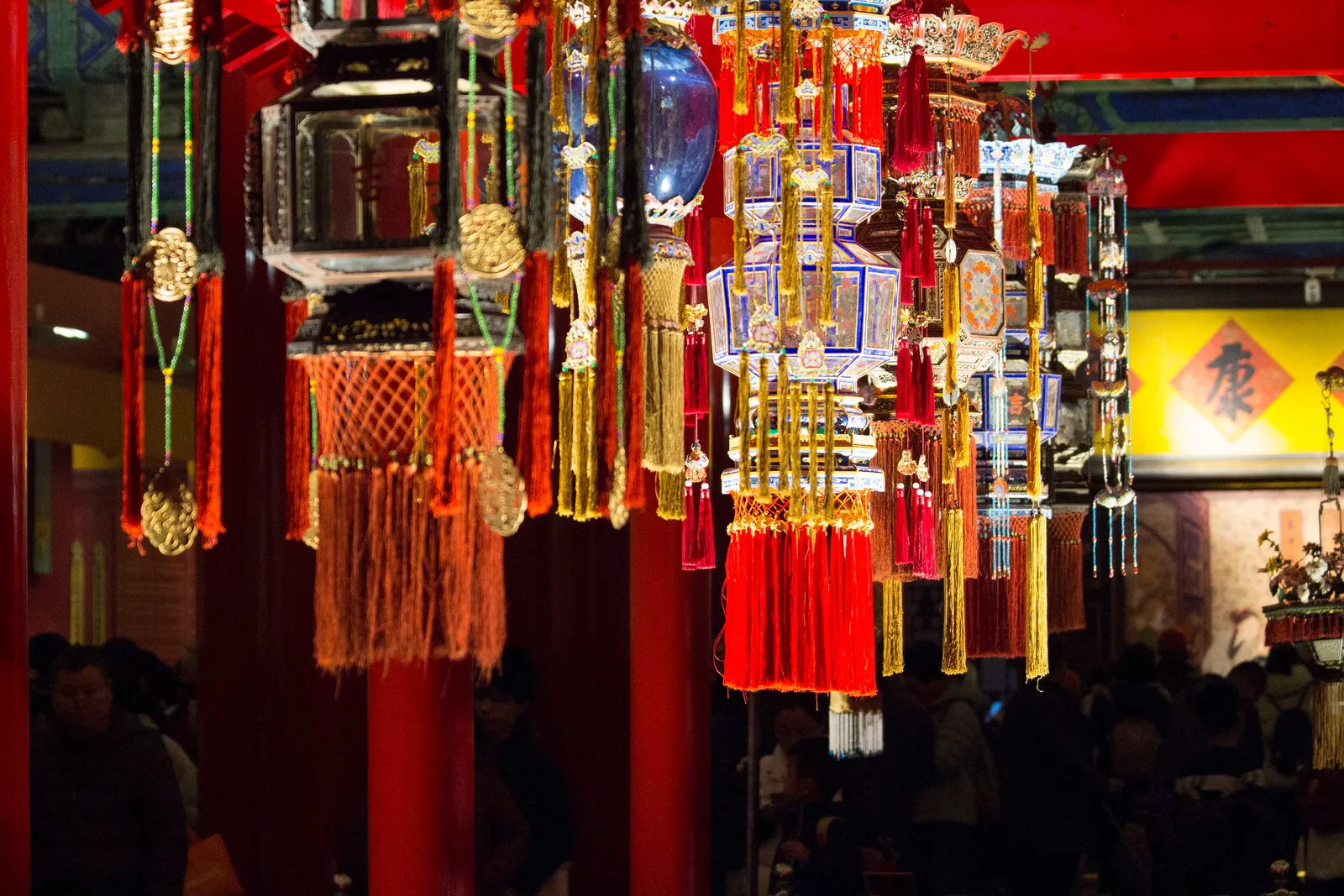
China has two giant holiday weeks: Spring Festival (Chinese New Year) in late January or February, and National Day Golden Week at the start of October. Hundreds of millions of people travel at the same time. You can still visit, and the festive atmosphere is worth seeing, but you need to book earlier and plan around crowds and closures.
The dates
National Day Golden Week 2026
The official holiday is 1–7 October 2026. As usual, weekend days are moved to make one long break, so Sunday 20 September and Saturday 10 October are working days. Expect the heaviest outbound travel around 30 September and 1 October, and the return rush on 6–7 October.
Chinese New Year 2027
Chinese New Year’s Day 2027 falls on Saturday 6 February; New Year’s Eve is 5 February. The State Council publishes the next year’s official holiday dates around November, and the 2027 schedule was not out yet when we last checked. Check before you go. For comparison, the 2026 Spring Festival holiday ran for nine days, 15–23 February.
Other public holidays in 2026
Shorter breaks also fill trains, hotels and sights:
- New Year’s Day: 1–3 January
- Qingming (Tomb-Sweeping Day): 4–6 April
- Labour Day: 1–5 May (Saturday 9 May was a working day)
- Dragon Boat Festival: 19–21 June
- Mid-Autumn Festival: 25–27 September
Chunyun: the 40-day travel rush
Around Chinese New Year comes chunyun (春运), the spring travel season. It lasts about 40 days, starting roughly two weeks before New Year; in 2026 it ran from 2 February to 13 March. Workers and students go home before the festival and travel back after it. The worst days are just before the holiday, at the end of the holiday, and after the Lantern Festival, when students return.
Train tickets
On 12306, tickets go on sale 15 days ahead, counting the day of purchase. Sale times differ by station, and the 12306 app shows them. Around holidays, popular trains can sell out within minutes, so be ready when your date opens.
- If a train is sold out, join the waitlist (候补) in 12306. You pay upfront, and the system gives you a ticket if someone returns one or extra trains are added. If nothing comes up, you get your money back.
- Some third-party apps advertise booking 30 or even 90 days ahead. That is only a pre-order: every platform follows the same 15-day window.
- Consider flying or a less popular departure time. See the high-speed train guide for alternatives between big cities.
Flights and hotels
Flight and hotel prices rise sharply for both holidays, and cheap rooms in popular destinations sell out weeks ahead. Book as soon as your plans are fixed and choose options with free cancellation. Fares are often lower on New Year’s Eve and New Year’s Day, when most people are already home. See domestic flights and hotels for foreigners.
Motorways are toll-free for small passenger cars during the long holidays, so roads out of big cities jam on the first and last days. Allow extra time for any airport transfer or day trip by road.
Sights: daily caps and bookings
Most major sights and museums limit daily visitors and need a real-name booking with your passport. On holidays these sell out fast. For the Forbidden City, tickets go on sale 7 days ahead at 20:00 China time and can vanish in minutes; see how to book Forbidden City tickets.
- Book every sight the moment its window opens. Our reservations center lists which sights need booking and when.
- Many museums that normally close on Mondays stay open on holiday Mondays, and some change their hours. Check the museum’s official account; see how to book museums.
- Arrive at opening time, and pick less famous sights in the afternoon.
What’s open at Chinese New Year
- Mostly open: big sights, malls, chain restaurants, hotels, metro and buses. Some close early on New Year’s Eve.
- Often closed: small family restaurants and shops, for a few days to a week or more around New Year. Street food areas can be quiet.
- Closed for the official holiday: banks (ATMs keep working) and government offices, including the exit-entry offices that extend visas. Plan any paperwork around it.
- Taxis and DiDi are harder to get on New Year’s Eve. Many restaurants only take set-menu bookings for the New Year’s Eve dinner, so book early or eat at your hotel.
Golden Week is different: almost everything is open, just very crowded.
Festivals and fireworks
The New Year period brings red lanterns, temple fairs and lantern shows. The Lantern Festival, on the 15th day of the new year, falls on 20 February 2027 and ends the season with lantern displays in many cities.
Fireworks are part of the tradition, but many cities restrict them. Beijing has banned fireworks almost everywhere, all year round, since 2022. Other cities set their own rules, and in towns and the countryside you will hear them all night around New Year. Do not set off fireworks yourself unless you are sure it is allowed.
Should you go?
If you want quiet sights and easy bookings, avoid these weeks; see the best time to visit China. If your dates are fixed, book trains, flights, hotels and sights early, follow our pre-trip timeline, and enjoy one of the liveliest times of the year.
Sources
- State Council General Office: notice on the 2026 public holiday schedule (4 Nov 2025) (gov.cn)
- NDRC: national teleconference on the 2026 Spring Festival travel season (ndrc.gov.cn)
- Wuhan Municipal Government: 2026 chunyun starts 2 February, peak days (wuhan.gov.cn)
- Suzhou Municipal Government: 12306 waitlist and 15-day presale period (suzhou.gov.cn)
- Beijing: year-round citywide fireworks ban from 1 January 2022 (bj148.org)
Checked against these sources on 2026-09-27. Rules change often, so confirm on the official site before you go.
Read next
More on Planning
 China visa-free countries: who gets 30 days without a visa (2026)78 passports can enter China without a visa: 50 for 30 days until set end dates, 28 under permanent agreements. Who qualifies and what to carry.
 How many days in China? What fits in 7, 10 and 14 daysTen days is the sweet spot for a first trip. What you can realistically see in one week, ten days or two weeks, and how visa rules cap your stay.
 240-hour visa-free transit in China: how it works (2026)Up to 10 days in China without a visa if you fly on to a third country. Eligible passports, ports, allowed areas and the mistakes that get people refused.