
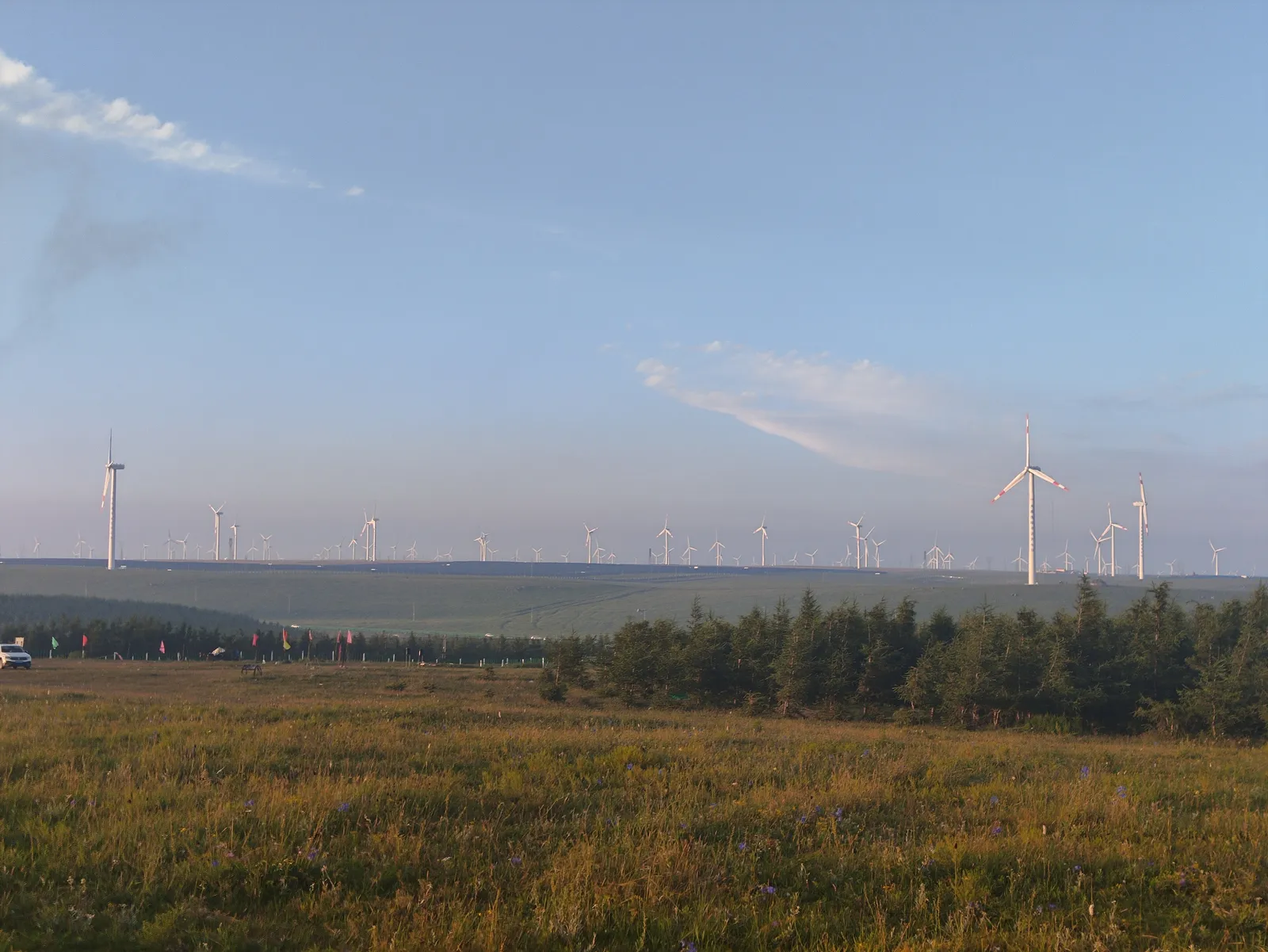
Huitengxile Grassland (Huanghuagou, day trip)
辉腾锡勒草原(黄花沟) · Huīténgxīlè Cǎoyuán (Huánghuā Gōu)
A high, cool upland steppe at about 2,000 metres with summer wildflowers, small lakes, rocky gullies and long lines of wind turbines; the Huanghuagou park has camps, riding and shows.
Booking recommendedBring your passportFull day (about 2 hours each way by car)
Tip
Bring a warm jacket even in July: it is often below 20 °C and windy. Agree on the price of horse rides and extras before you start.
- Opening hours
- Seasonal: roughly mid-June to early October (about 07:30–18:00 in summer, 08:00–17:30 in September); the park closes for winter after the National Day holiday To be confirmed
- Price
- Huanghuagou basic ticket from about ¥90; packages with the shuttle up the plateau from about ¥215–295 To be confirmed
- How to book
- Easiest as a day or overnight tour from Hohhot, or hire a car with driver; tickets are also sold on Trip.com and at the gate. To be confirmed
- Getting there
- About 130 km east of Hohhot in Chahar Right Middle Banner (Ulanqab); no practical public transport, so take a tour or hired car To be confirmed
- Address in Chinese
- 内蒙古自治区乌兰察布市察哈尔右翼中旗辉腾锡勒黄花沟旅游区
Photo: Phlins Chen · CC BY-SA 4.0
From other travelers
Write a reviewSources
Checked against these sources on 2026-10-02. Rules change often, so confirm on the official site before you go.
Not yet confirmed by an official source: Opening hours, Price, How to book, Getting there, addressZh, coords
More in Hohhot
内蒙古博物院Inner Mongolia MuseumThe region’s great museum, in a new building opened in 2025: dinosaurs from the Gobi, Xiongnu and Khitan gold, Mongol empire treasures and nomad life, from saddles to a full ger.大召寺Dazhao TempleHohhot’s oldest Tibetan Buddhist monastery, founded by Altan Khan in 1579 around which the city grew; famous for its silver Buddha, dragon carvings and murals.席力图召Xilitu Zhao MonasteryA working Gelug monastery opposite Dazhao, first built in 1585, mixing Chinese halls with a Tibetan-style main hall under green and gold roofs; still the seat of a living Buddha.五塔寺Five Pagoda TempleA 1727–1732 “diamond throne” stupa topped by five small pagodas and carved with 1,563 Buddhas, plus a rare Mongolian astronomical map in stone.