
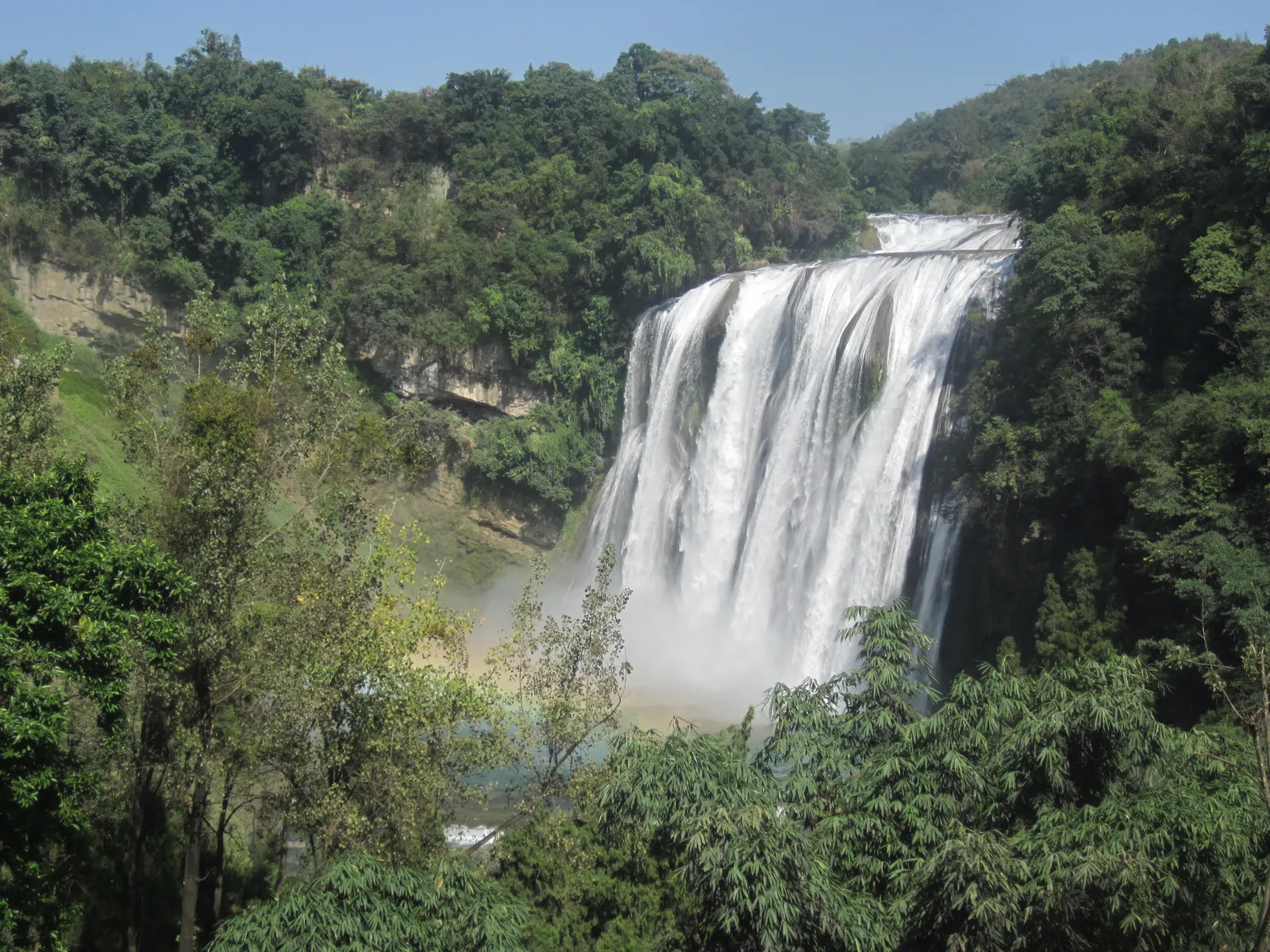
Huangguoshu Waterfall
黄果树瀑布 · Huángguǒshù Pùbù
China’s best-known waterfall, about 78 m high and 100 m wide, in a karst park with two more areas: the terraced Doupotang falls and the stone forests and caves of Tianxing Bridge.
Booking recommendedBring your passportFull day from Guiyang (4–6 hours in the park)
Tip
Arrive at 07:00, see the main waterfall first, then Doupotang; walk behind the falls through the Water Curtain Cave. Head back by about 16:00 to catch your train. On 240-hour visa-free transit via Guiyang airport? Guizhou is all inside the stay area, so this trip is fine.
- Opening hours
- From 07:00. Mar–Nov the main waterfall and Doupotang close about 18:30, Tianxing Bridge about 17:40–18:00; Dec–Feb closing is earlier. To be confirmed
- Price
- Entry ¥160 (Mar–Nov) or ¥150 (Dec–Feb), plus the compulsory park bus ¥50 and insurance ¥10, so about ¥220 in total. Escalators at the main falls are optional (¥30 one way, ¥50 both).
- How to book
- Book online with your passport on Trip.com or the scenic area’s official WeChat channel. Local reports say official booking opens up to 15 days ahead and closes at midnight the day before; book early for weekends and the October holiday. To be confirmed
- Getting there
- About 130 km south-west of Guiyang. High-speed train Guiyang North → Anshun West (about 30 minutes, about ¥47), then the tourist shuttle outside the station (about 40–50 minutes, about ¥25, pay by WeChat). Or the direct tourist bus from Jinyang bus station (about 2.5 hours, about ¥50, morning departures). To be confirmed
- Address in Chinese
- 贵州省安顺市镇宁布依族苗族自治县黄果树镇黄果树风景名胜区
Photo: Huangdan2060 · CC BY 3.0
From other travelers
Write a reviewSources
Checked against these sources on 2026-10-02. Rules change often, so confirm on the official site before you go.
Not yet confirmed by an official source: Opening hours, How to book, Getting there
More in Guiyang
青岩古镇Qingyan Ancient TownA 600-year-old garrison town south of Guiyang with stone walls and gates, flagstone lanes, temples, a Catholic church and old merchant houses.西江千户苗寨Xijiang Miao VillageThe largest Miao village in China: more than a thousand wooden stilt houses climbing two hillsides above a river, with wind-and-rain bridges, a museum and daily song-and-dance shows.荔波小七孔Libo Xiaoqikong (Small Seven Arches)A UNESCO-listed karst forest valley named after an old seven-arch stone bridge, with turquoise lakes, a forest of trees growing in a river, and chains of small waterfalls.黔灵山公园Qianling Mountain ParkA forested mountain park right in the city, with hundreds of free-roaming macaques, Hongfu Temple (a 17th-century Buddhist monastery) near the top, a lake and a small zoo.