
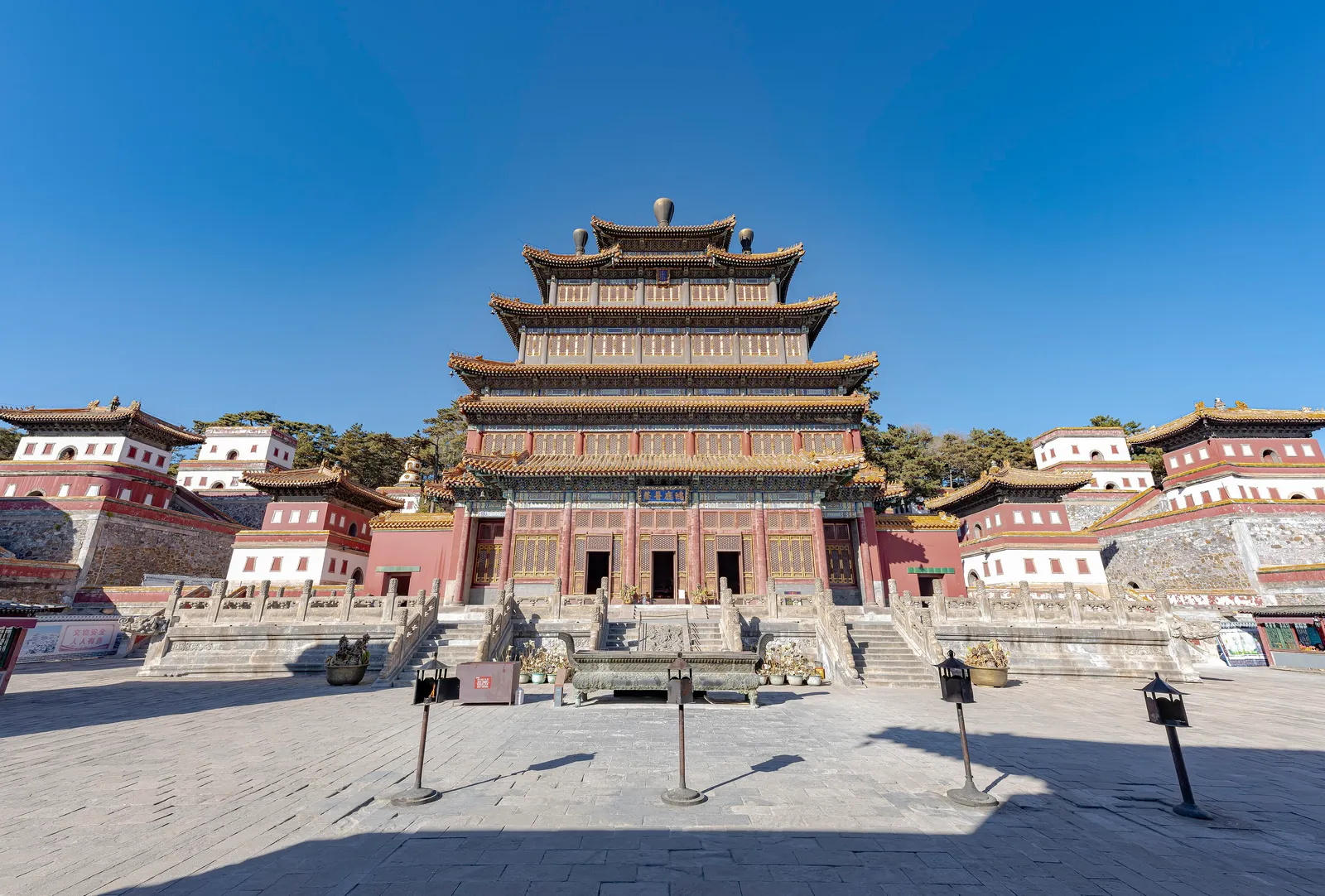
Puning Temple (Big Buddha Temple)
普宁寺 · Pǔníng Sì
An active Buddhist temple from 1755, Chinese in front and Tibetan behind, whose tall pavilion holds a 22-metre wooden Guanyin with many arms, one of the largest wooden statues in the world.
Booking recommendedBring your passport1.5 hours
Tip
It is a working temple: dress modestly and do not photograph monks during prayers. Photos of the giant Guanyin may be forbidden inside the pavilion.
- Opening hours
- About 08:00–17:30 (to 18:00 in midsummer) from April to early October; 08:30–17:00 in winter, with last tickets at 16:00 To be confirmed
- Price
- ¥80 from 1 April to 31 October, ¥60 from 1 November to 31 March, including the neighbouring Puyou Temple. Some recent sources list ¥60 year-round, so check when booking. To be confirmed
- How to book
- Real-name ticket on the temple’s official WeChat account or on Trip.com; foreigners can also buy at the ticket office with a passport. To be confirmed
- Getting there
- Bus 6 to Dafosi (大佛寺) stop, then a 5–10 minute walk; about 10 minutes by taxi from the Resort’s main gate
- Address in Chinese
- 河北省承德市双桥区普宁路普宁寺
Photo: ScareCriterion12 · CC BY-SA 4.0
From other travelers
Write a reviewSources
Checked against these sources on 2026-10-02. Rules change often, so confirm on the official site before you go.
Not yet confirmed by an official source: Opening hours, Price, How to book, addressZh
More in Chengde
避暑山庄Chengde Mountain ResortThe Qing emperors’ summer capital: a walled park of palaces, lakes, pavilions and wooded hills, the largest surviving imperial garden in China; a UNESCO World Heritage Site.普陀宗乘之庙Putuo Zongcheng Temple (Little Potala)The largest of the Outer Temples, built in 1767–1771 as a copy of Lhasa’s Potala Palace, with a great red terrace climbing the hillside and a gilded hall on top.须弥福寿之庙Xumi Fushou TempleBuilt in 1780 to host the Sixth Panchen Lama for the Qianlong Emperor’s 70th birthday, modelled on Tashilhunpo Monastery, with gilded dragons on its main hall’s roof.金山岭长城Jinshanling Great WallA dramatic Ming dynasty section with dense watchtowers along a mountain ridge, partly restored and partly wild; one of the most photographed stretches of the Great Wall.