
Is China safe for tourists? Scams, traffic and emergency numbers
Violent crime is rare, but scams and traffic are real risks. The tea house scam, fake taxis, food and water, 110/120/119 and police registration.
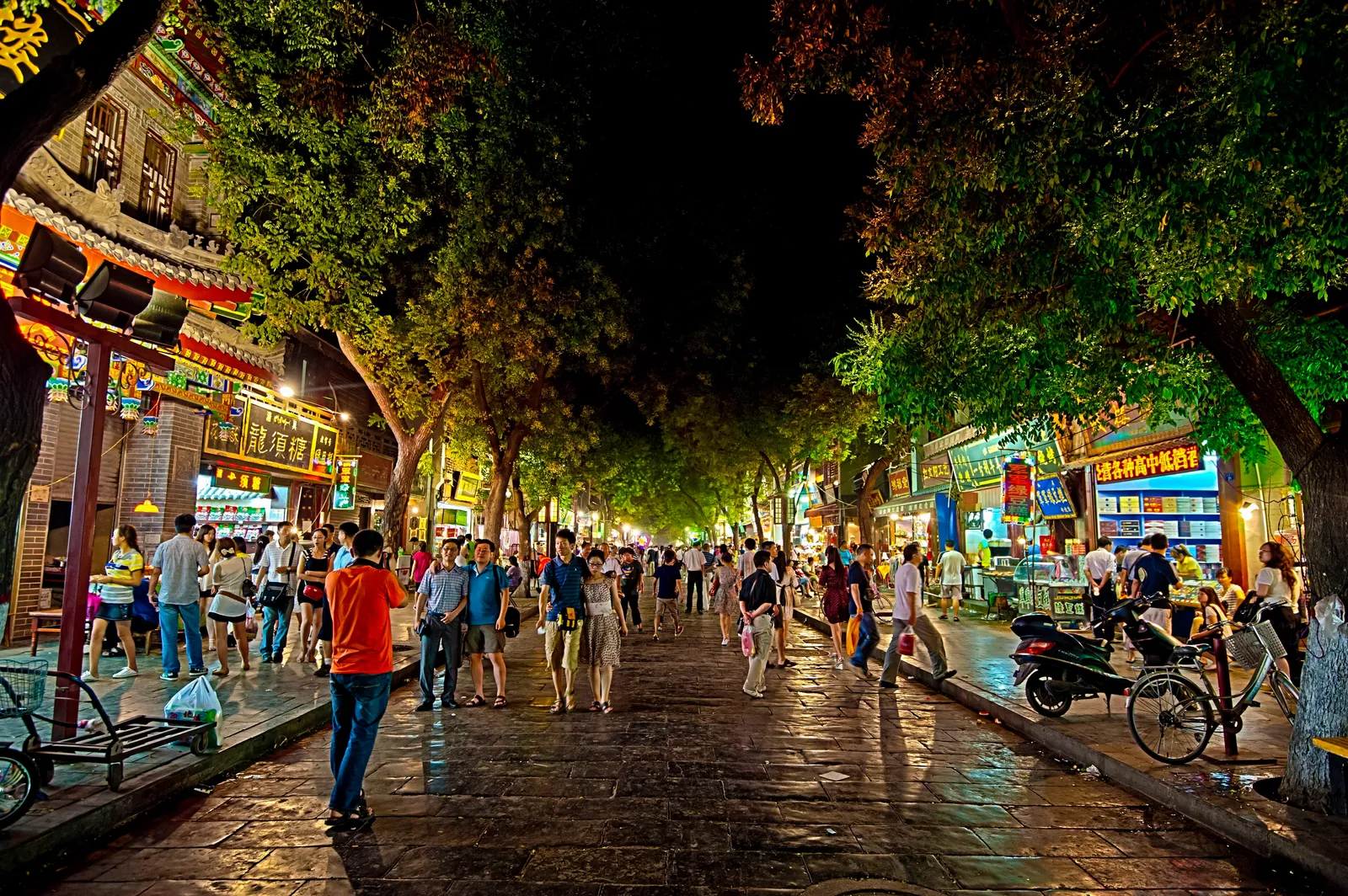
Yes. For most visitors China is a very safe country. Violent crime against tourists is rare, city centres are busy late into the night, and there are cameras and police almost everywhere. The real risks are more ordinary: scams in tourist areas, traffic, and getting sick from heat or unfamiliar food.
Crime
Serious crime against foreigners is uncommon. Pickpocketing does happen in crowded places such as train stations, busy metro lines and famous sights, so keep your phone and passport in a zipped pocket. Losing your phone is the bigger problem here, because it is your wallet, map and translator. Write down your hotel address in Chinese and keep a small amount of cash as a backup.
Scams to know
- The tea house scam. Friendly young people, often saying they are students who want to practise English, invite you for tea, a drink or an art exhibition. The bill is hundreds or thousands of yuan, and staff pressure you to pay. It is common around Beijing’s Wangfujing and Tiananmen, and Shanghai’s Nanjing Road and the Bund. Politely decline invitations from strangers, or choose the place yourself.
- Unlicensed taxis. At airports and stations, ignore drivers who approach you. Use the official taxi rank or DiDi, and make sure the meter runs.
- Rickshaws and tours at the gate. Agree the full price, in writing if you can, before you get in. Many touts quote per person or per section.
- Fake banknotes. Fake ¥100 notes circulate. Mobile payment avoids the problem; if you use cash, check notes when you get change.
- QR code tricks. Only scan codes at the counter or on the official menu, and do not scan codes stuck on lamp posts or handed out on the street.
Traffic
Traffic is the biggest everyday danger. Cars may turn right on a red light, and electric scooters are silent and often ride on pavements and against the traffic. At a green pedestrian light, still look both ways. On busy roads, cross with a group of locals and use underpasses and footbridges.
Food, water and health
- Do not drink tap water. Drink bottled or boiled water; hotels usually provide both.
- Street food is generally fine at busy stalls where food is cooked in front of you.
- Summers are hot and humid. Carry water and rest in the middle of the day.
- Air quality in northern cities can be poor in winter. Check an air-quality app.
- High places such as Tibet and parts of Yunnan can cause altitude sickness. Go up slowly.
- Big cities have international clinics and hospitals with English-speaking staff, but they are expensive. Get travel insurance that covers medical evacuation.
Emergency numbers
- 110 police
- 120 ambulance
- 119 fire, and rescue after serious accidents
- 122 traffic accidents
In Shanghai, 110 is answered in English and seven other foreign languages, and 119 and 120 also handle English. Elsewhere English support varies. If you are not sure which number to call, call 110, say "English, please" and wait for an interpreter. Save your embassy’s number in your phone too.
Passport and police registration
Carry your passport every day. You need it for trains, many sights and hotel check-in, and police can ask for it. A photo or photocopy is not accepted.
Foreigners must register where they stay within 24 hours of arriving. Hotels do this for you when you check in. If you stay with friends or in a private flat, you or your host must register. Since 21 September 2026 you can do this online anywhere in China, through the NIA website, the NIA 12367 app, its WeChat mini program or an Alipay mini program. Missing registration can lead to a warning or a fine.
A few more things
- Do not photograph military sites, and follow signs that ban photos.
- Security checks at metro stations and big sights are normal. Keep liquids and lighters to a minimum.
- Women travelling alone generally report feeling safe, including at night. Normal city precautions apply.
For what to set up before you fly, see the pre-trip timeline and our payment guide.
Sources
- NIA: online accommodation registration for foreigners (policy interpretation) (en.nia.gov.cn)
- Beijing government: online accommodation registration nationwide from 21 September 2026 (english.beijing.gov.cn)
- Shanghai government: what to do in an emergency (english.shanghai.gov.cn)
- UK Foreign Office: China travel advice, safety and security (gov.uk)
Checked against these sources on 2026-09-27. Rules change often, so confirm on the official site before you go.
Read next
More on Planning
 China visa-free countries: who gets 30 days without a visa (2026)78 passports can enter China without a visa: 50 for 30 days until set end dates, 28 under permanent agreements. Who qualifies and what to carry.
 How many days in China? What fits in 7, 10 and 14 daysTen days is the sweet spot for a first trip. What you can realistically see in one week, ten days or two weeks, and how visa rules cap your stay.
 240-hour visa-free transit in China: how it works (2026)Up to 10 days in China without a visa if you fly on to a third country. Eligible passports, ports, allowed areas and the mistakes that get people refused.